


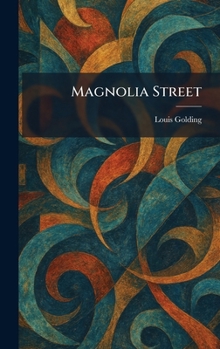
Magnolia Street

Select Format
Select Condition 
Book Overview
"Magnolia Street" is a sweeping and panoramic novel that captures the heartbeat of a working-class neighborhood in Manchester, England. The narrative centers on a single street where Jewish and Gentile families live side by side, yet remain separated by deep-seated cultural and social chasms. Through a series of interlocking stories spanning several decades, Louis Golding explores the complex dynamics of this community, from the shared joys of celebration to the tensions of prejudice and the transformative impact of global events.
As the residents navigate the challenges of poverty, ambition, and changing times, the novel paints a vivid portrait of human resilience and the enduring power of neighborly bonds. Golding's rich characterizations and keen ear for dialogue bring to life the sights, sounds, and struggles of a bustling urban environment. "Magnolia Street" stands as a significant work of early 20th-century literature, offering a compassionate and detailed look at interfaith relations and the immigrant experience in Britain. This sprawling saga remains a poignant exploration of how diverse groups of people can find common ground within the confines of a shared landscape, making it a masterpiece of social realism.
This work has been selected by scholars as being culturally important, and is part of the knowledge base of civilization as we know it. This work was reproduced from the original artifact, and remains as true to the original work as possible. Therefore, you may see the original copyright references, library stamps (as most of these works have been housed in our most important libraries around the world), and other notations in the work.
This work is in the public domain in the United States of America, and possibly other nations. Within the United States, you may freely copy and distribute this work, as no entity (individual or corporate) has a copyright on the body of the work.
As a reproduction of a historical artifact, this work may contain missing or blurred pages, poor pictures, errant marks, etc. Scholars believe, and we concur, that this work is important enough to be preserved, reproduced, and made generally available to the public. We appreciate your support of the preservation process, and thank you for being an important part of keeping this knowledge alive and relevant.
Customer Reviews
ThriftBooks ® and the ThriftBooks ® logo are registered trademarks of Thrift Books Global, LLC
