


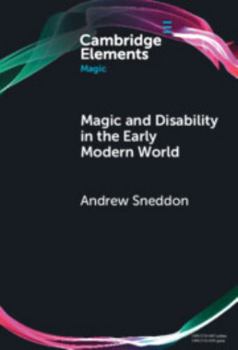
Magic and Disability in the Early Modern World (Elements in Magic)
No Customer Reviews

This Element argues that early modern witchcraft (discourse, visual imagery and trials) in Scotland, England, Ireland and America demonised, devalued and disqualified non-normative bodies and minds. Using interpretative frameworks of monstrosity and deformity, while working within wider religious and medical understandings of disability, physical, cognitive, and sensory difference was read as inner corruption, sin or divine punishment or medicalised and pathologized as something to be fixed. The witch's body became monstrous through association with demonic creatures and physical transformation, while visible physical difference offered sought-after physical evidence of witchcraft. Intersecting with social status, reputation, and gender, disability then explains why some individuals were accused of witchcraft. Disability could also hamper a suspects' ability to defend themselves during interrogation and trial. Their victims, the bewitched, however, used witchcraft accusations to navigate discriminatory narratives and treatment of disabling conditions and to find ways to cure or mitigate them.
Format:Hardcover
Language:English
ISBN:1009709380
ISBN13:9781009709385
Release Date:October 2026
Publisher:Cambridge University Press
Length:75 Pages
Customer Reviews
0 rating
Copyright © 2026 Thriftbooks.com
Terms of Use | Privacy Policy | Do Not Sell/Share My Personal Information | Cookie Policy | Cookie Preferences | Accessibility Statement
ThriftBooks ® and the ThriftBooks ® logo are registered trademarks of Thrift Books Global, LLC
ThriftBooks ® and the ThriftBooks ® logo are registered trademarks of Thrift Books Global, LLC
