


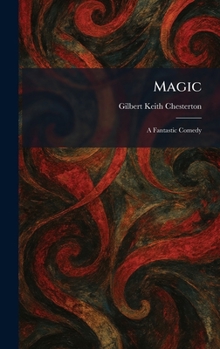
Magic: A Fantastic Comedy

"Magic: A Fantastic Comedy" is a thought-provoking play by the celebrated master of paradox, G. K. Chesterton. Originally written for the stage, this work explores the volatile intersection of the rational world and the supernatural through the lens of an elegant drawing-room comedy. The plot centers on a mysterious Conjurer who is invited to the household of an eccentric Duke to provide entertainment. However, what begins as an evening of sleight-of-hand quickly evolves into a profound existential challenge for the houseguests, particularly for a cynical doctor and a young man whose rigid worldview is shattered by an inexplicable occurrence.
Chesterton utilizes his signature wit and sharp dialogue to confront the dogmatic materialism of his age, posing timeless questions about faith, skepticism, and the nature of reality. As the characters debate whether the Conjurer's feats are mere trickery or genuine magic, the play serves as a spirited defense of wonder in an increasingly disenchanted world. "Magic: A Fantastic Comedy" remains a significant entry in Chesterton's literary canon, offering both humorous social commentary and a deep philosophical inquiry into the mysteries of the human condition. It is an essential read for admirers of early 20th-century English drama and philosophical fiction.
This work has been selected by scholars as being culturally important, and is part of the knowledge base of civilization as we know it. This work was reproduced from the original artifact, and remains as true to the original work as possible. Therefore, you may see the original copyright references, library stamps (as most of these works have been housed in our most important libraries around the world), and other notations in the work.
This work is in the public domain in the United States of America, and possibly other nations. Within the United States, you may freely copy and distribute this work, as no entity (individual or corporate) has a copyright on the body of the work.
As a reproduction of a historical artifact, this work may contain missing or blurred pages, poor pictures, errant marks, etc. Scholars believe, and we concur, that this work is important enough to be preserved, reproduced, and made generally available to the public. We appreciate your support of the preservation process, and thank you for being an important part of keeping this knowledge alive and relevant.
Related Subjects
DramaCustomer Reviews
ThriftBooks ® and the ThriftBooks ® logo are registered trademarks of Thrift Books Global, LLC
