


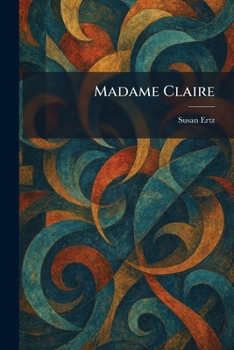
Madame Claire

"Madame Claire" is a poignant and charming novel that centers on the life of Claire Gregory, a wise and serene seventy-year-old woman living in a London hotel. As the matriarch of her family, Claire serves as a steadying force for those around her, offering counsel and perspective to her children and grandchildren. Through her observant eyes and gentle influence, the narrative explores the complexities of family dynamics, the evolution of romantic relationships across generations, and the graceful acceptance of aging.
Written with Susan Ertz's signature wit and emotional depth, the story contrasts Claire's calm detachment with the turbulent lives of her descendants. From the romantic entanglements of her granddaughter to the personal struggles of her son, Claire navigates the shifting social landscapes of post-World War I England with a blend of humor and profound insight. The work stands as a celebrated piece of domestic fiction, lauded for its character-driven storytelling and its thoughtful examination of human nature.
This enduring literary work captures the essence of early 20th-century domestic life, emphasizing the importance of empathy and the enduring strength of familial bonds. "Madame Claire" remains a delightful and sophisticated study of a woman who, having lived through many eras, finds contentment in her role as a confidante and observer.
This work has been selected by scholars as being culturally important, and is part of the knowledge base of civilization as we know it. This work was reproduced from the original artifact, and remains as true to the original work as possible. Therefore, you may see the original copyright references, library stamps (as most of these works have been housed in our most important libraries around the world), and other notations in the work.
This work is in the public domain in the United States of America, and possibly other nations. Within the United States, you may freely copy and distribute this work, as no entity (individual or corporate) has a copyright on the body of the work.
As a reproduction of a historical artifact, this work may contain missing or blurred pages, poor pictures, errant marks, etc. Scholars believe, and we concur, that this work is important enough to be preserved, reproduced, and made generally available to the public. We appreciate your support of the preservation process, and thank you for being an important part of keeping this knowledge alive and relevant.
Customer Reviews
ThriftBooks ® and the ThriftBooks ® logo are registered trademarks of Thrift Books Global, LLC
