


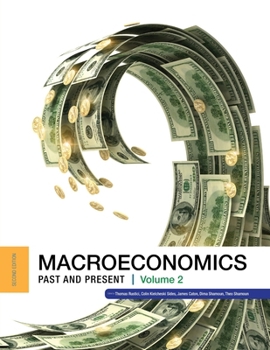
Macroeconomics: Past and Present Volume 2

Macroeconomics: Past and Present, Volume 2 examines the evolution of macroeconomic thought and its critical analyses. It explores perspectives from classic macroeconomic models to those shaped by 20th-century theories. The book specifically delves into the complexities of economic growth, monetary policy, business cycles, and the Great Depression-culminating in a discussion about the future of money and alternative monetary regimes.
The book addresses macroeconomic principles, providing unique insights into banking and monetary policies, the intricacies of business cycles, the economic conditions during the interwar period and Great Depression, as well as essays on the Quantity Theory of Money. The volume scrutinizes the foundation of macroeconomics and the multiple interpretations of how economies operate over time, impacted by both monetary actions and broader institutional dynamics.
Recommended for advanced undergraduate and graduate courses, Macroeconomics offers substantial content for subjects such as macroeconomics, monetary economics, economic history, and similar topics.
Thomas Rustici is an associate professor of economics and the associate director of undergraduate studies in the Department of Economics at George Mason University. He holds undergraduate and graduate degrees in economics and public policy from George Mason University.
Colin Kielcheski Sides is a graduate lecturer and graduate student in the economics program at George Mason University.
Dima Shamoun is a clinical assistant professor in the Department of Finance at the McCombs School of Business at the University of Texas at Austin. She teaches a wide variety of graduate and undergraduate courses including those for MBA and BBA programs.
Theo Shamoun earned both his B.A., summa cum laude, and M.A. degrees in economics from George Mason University.
James Caton is an assistant professor in the Department of Agribusiness and Applied Economics at North Dakota State University. He regularly writes as a Fellow for the American Institute for Research's Sound Money Project.
Customer Reviews
ThriftBooks® and the ThriftBooks® logo are registered trademarks of Thrift Books Global, LLC
