


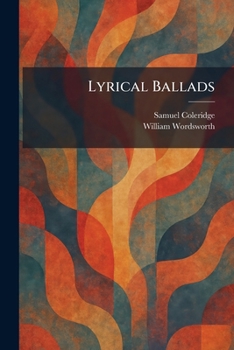
Lyrical Ballads

"Lyrical Ballads: 1798" is a foundational collection of poems that marked a definitive turning point in English literature, effectively launching the Romantic movement. A collaborative effort between William Wordsworth and Samuel Taylor Coleridge, this work sought to revolutionize poetic form by abandoning the rigid conventions of 18th-century neoclassicism in favor of language more closely aligned with common speech and themes drawn from the natural world.
Within its pages, readers will find some of the most enduring works in the English language, including Coleridge's haunting masterpiece, "The Rime of the Ancient Mariner," and Wordsworth's evocative reflections in "Lines Written a Few Miles above Tintern Abbey." The collection explores the profound connection between the human spirit and nature, the power of memory, and the beauty found in everyday life. By shifting the focus of poetry toward internal emotion and imaginative experience, "Lyrical Ballads: 1798" reshaped the literary landscape and continues to be celebrated for its lyrical beauty, psychological depth, and enduring influence on the Western canon. This work remains essential reading for anyone interested in the evolution of poetry and the birth of modern literary sensibilities.
This work has been selected by scholars as being culturally important, and is part of the knowledge base of civilization as we know it. This work was reproduced from the original artifact, and remains as true to the original work as possible. Therefore, you may see the original copyright references, library stamps (as most of these works have been housed in our most important libraries around the world), and other notations in the work.
This work is in the public domain in the United States of America, and possibly other nations. Within the United States, you may freely copy and distribute this work, as no entity (individual or corporate) has a copyright on the body of the work.
As a reproduction of a historical artifact, this work may contain missing or blurred pages, poor pictures, errant marks, etc. Scholars believe, and we concur, that this work is important enough to be preserved, reproduced, and made generally available to the public. We appreciate your support of the preservation process, and thank you for being an important part of keeping this knowledge alive and relevant.
Customer Reviews
ThriftBooks ® and the ThriftBooks ® logo are registered trademarks of Thrift Books Global, LLC
