


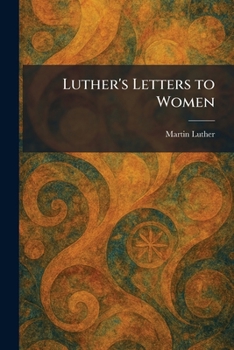
Luther's Letters to Women

"Luther's Letters to Women" offers a profound and intimate glimpse into the personal and pastoral life of Martin Luther, the central figure of the Protestant Reformation. This collection of correspondence reveals a side of the reformer often overshadowed by his theological treatises and public debates. Through these letters, readers encounter Luther as a husband, father, friend, and advisor, providing spiritual guidance, comfort, and practical advice to the women in his life-ranging from his beloved wife, Katherine von Bora, to noblewomen and grieving mothers.
The work serves as a significant historical and religious document, illuminating the social dynamics of the 16th century and the evolving role of women within the newly forming Protestant tradition. Luther's writing style in these missives is characterized by its directness, humor, and deep compassion, reflecting his views on marriage, education, and faith. This volume is an essential resource for those interested in the history of the Reformation, Christian ethics, and the personal character of one of history's most influential religious leaders. It underscores the importance of domestic life and personal relationships in the broader context of religious transformation.
This work has been selected by scholars as being culturally important, and is part of the knowledge base of civilization as we know it. This work was reproduced from the original artifact, and remains as true to the original work as possible. Therefore, you may see the original copyright references, library stamps (as most of these works have been housed in our most important libraries around the world), and other notations in the work.
This work is in the public domain in the United States of America, and possibly other nations. Within the United States, you may freely copy and distribute this work, as no entity (individual or corporate) has a copyright on the body of the work.
As a reproduction of a historical artifact, this work may contain missing or blurred pages, poor pictures, errant marks, etc. Scholars believe, and we concur, that this work is important enough to be preserved, reproduced, and made generally available to the public. We appreciate your support of the preservation process, and thank you for being an important part of keeping this knowledge alive and relevant.
Customer Reviews
ThriftBooks ® and the ThriftBooks ® logo are registered trademarks of Thrift Books Global, LLC
