


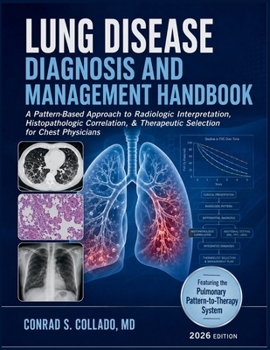
Lung Disease Diagnosis and Management Handbook: A Pattern-Based Approach to Radiologic Interpretation, Histopathologic Correlation, & Therapeutic Sele

Built for chest physicians and pulmonary clinicians working through complex lung disease, this handbook connects radiologic pattern recognition, histopathologic correlation, pulmonary physiology, and therapeutic selection into one clinical reasoning system. It moves from HRCT morphology, tissue patterns, PFT interpretation, and gas-exchange behavior through interstitial lung disease, airway-centered disease, infection, vascular disorders, acute diffuse lung injury, and longitudinal care. The scientific foundation is mechanism-first: fibrosis, inflammation, infection, obstruction, mucus retention, exposure injury, vascular remodeling, and respiratory failure each point to a different diagnostic and therapeutic pathway.
Featuring The Pulmonary Pattern-to-Therapy System, the book helps clinicians move from presenting pattern to radiologic signature, histopathologic correlate, workup pivot, treatment anchor, and monitoring trigger.
- Interpret HRCT patterns - UIP, NSIP, organizing pneumonia, air trapping, nodules, bronchiectasis, ground-glass opacity, and vascular clues become clinically actionable findings.
- Correlate tissue with imaging - histopathologic patterns such as UIP, NSIP, granulomas, eosinophilic infiltrates, diffuse alveolar damage, capillaritis, and airway remodeling sharpen the differential.
- Diagnose fibrotic and inflammatory ILD - separate IPF, progressive pulmonary fibrosis, CTD-ILD, hypersensitivity pneumonitis, sarcoidosis, occupational disease, and organizing lung disease.
- Manage airway-centered disease - connect COPD, asthma, bronchiectasis, mucus plugging, sputum microbiology, small-airway disease, and inhaled therapy to the correct phenotype.
- Recognize infection and mimics - distinguish pneumonia, aspiration, fungal and mycobacterial disease, edema, hemorrhage, malignancy, pulmonary embolism, and drug injury.
- Identify vascular discordance - use DLCO, exertional desaturation, CTPA, V/Q scanning, echocardiography, and right-heart catheterization pathways to detect pulmonary vascular disease.
- Select therapy by mechanism - choose antimicrobial, immunomodulatory, antifibrotic, inhaled, airway-clearance, oxygen, ventilatory, rehabilitation, referral, or palliative pathways with clear monitoring targets.
Use this handbook to turn complex lung disease patterns into safer diagnoses, sharper treatment choices, and better longitudinal care.
Customer Reviews
ThriftBooks ® and the ThriftBooks ® logo are registered trademarks of Thrift Books Global, LLC
