


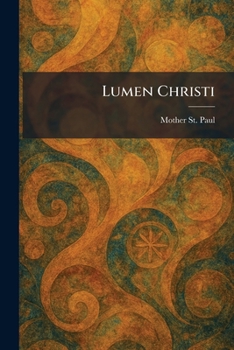
Lumen Christi

Select Format
Select Condition 
Book Overview
"Lumen Christi" is a profound collection of spiritual meditations designed to guide the reader through the liturgical season of Easter and the weeks following the Resurrection. Authored by Mother St. Paul, a celebrated figure in Catholic devotional literature, this work offers a series of contemplative exercises intended to deepen one's understanding of the Paschal mystery and its transformative power in the life of the believer.
The book provides a structured approach to prayer, focusing on the biblical accounts of the Risen Christ and the spiritual growth of the early Church. Through insightful prose and a deeply reverent tone, Mother St. Paul invites readers to reflect on themes of hope, divine grace, and spiritual renewal. Each meditation is carefully crafted to foster a closer personal connection to the divine, making it an invaluable resource for both private reflection and structured spiritual retreats. "Lumen Christi" remains an enduring classic of early 20th-century religious literature, offering timeless wisdom for those seeking to enrich their spiritual journey and embrace the light of faith during the most joyous season of the Christian calendar.
This work has been selected by scholars as being culturally important, and is part of the knowledge base of civilization as we know it. This work was reproduced from the original artifact, and remains as true to the original work as possible. Therefore, you may see the original copyright references, library stamps (as most of these works have been housed in our most important libraries around the world), and other notations in the work.
This work is in the public domain in the United States of America, and possibly other nations. Within the United States, you may freely copy and distribute this work, as no entity (individual or corporate) has a copyright on the body of the work.
As a reproduction of a historical artifact, this work may contain missing or blurred pages, poor pictures, errant marks, etc. Scholars believe, and we concur, that this work is important enough to be preserved, reproduced, and made generally available to the public. We appreciate your support of the preservation process, and thank you for being an important part of keeping this knowledge alive and relevant.
Customer Reviews
ThriftBooks ® and the ThriftBooks ® logo are registered trademarks of Thrift Books Global, LLC
