


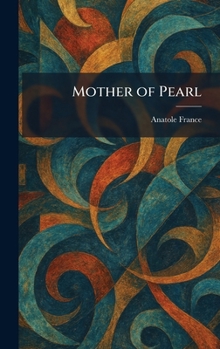
Mother of Pearl

Select Format
Select Condition 
Book Overview
"Mother of Pearl" is an evocative collection of short stories by the Nobel Prize-winning author Anatole France, showcasing his mastery of irony, skepticism, and historical storytelling. The collection features some of France's most celebrated short works, including the famous "The Procurator of Judea," a thought-provoking exploration of memory and the legacy of historical figures through the eyes of an aging Pontius Pilate. Each tale in this volume serves as a window into different eras, ranging from the legends of early Christianity and the Middle Ages to the tumultuous period of the French Revolution.
Through his elegant prose and keen psychological insight, France examines the complexities of faith, human folly, and the passage of time. The stories are characterized by a delicate balance of wit and pathos, often challenging traditional narratives and offering a nuanced perspective on religious and political devotion. As a cornerstone of early 20th-century literature, "Mother of Pearl" remains a profound meditation on the subjective nature of truth and the enduring beauty of the written word. This collection is essential reading for those who appreciate philosophical fiction and the art of the short story at its most refined.
This work has been selected by scholars as being culturally important, and is part of the knowledge base of civilization as we know it. This work was reproduced from the original artifact, and remains as true to the original work as possible. Therefore, you may see the original copyright references, library stamps (as most of these works have been housed in our most important libraries around the world), and other notations in the work.
This work is in the public domain in the United States of America, and possibly other nations. Within the United States, you may freely copy and distribute this work, as no entity (individual or corporate) has a copyright on the body of the work.
As a reproduction of a historical artifact, this work may contain missing or blurred pages, poor pictures, errant marks, etc. Scholars believe, and we concur, that this work is important enough to be preserved, reproduced, and made generally available to the public. We appreciate your support of the preservation process, and thank you for being an important part of keeping this knowledge alive and relevant.
Related Subjects
Fiction History Literary Literary Criticism & Collections Literature Literature & FictionCustomer Reviews
ThriftBooks ® and the ThriftBooks ® logo are registered trademarks of Thrift Books Global, LLC
