


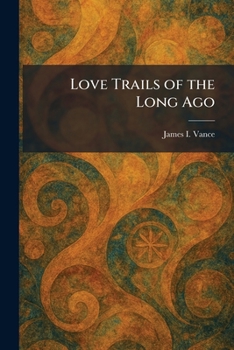
Love Trails of the Long Ago

Select Format
Select Condition 
Book Overview
"Love Trails of the Long Ago" is a soul-stirring collection of narratives that explores the intersection of romance, history, and faith. Written by the esteemed James I. Vance, this work delves into the timeless stories of the past, focusing on the enduring power of love as it manifests in the lives of historical and biblical figures. Through a series of evocative sketches, Vance captures the human experience of devotion, highlighting how these love trails have shaped the course of spiritual and human history.
The book offers readers a contemplative journey through various epochs, presenting characters whose lives are marked by passion, sacrifice, and divine guidance. Each chapter serves as a meditation on the beauty of the heart's journey, blending poetic prose with profound religious insight. Whether examining the bonds of ancient figures or reflecting on the universal nature of affection, Vance's writing remains deeply rooted in a Christian worldview, providing both inspiration and historical perspective.
Ideal for those interested in biblical biography and devotional literature, "Love Trails of the Long Ago" stands as a testament to the persistent influence of love across the centuries. It invites readers to look back at the legacies of those who walked before us, finding in their stories a resonance that continues to inspire modern seekers of truth and grace.
This work has been selected by scholars as being culturally important, and is part of the knowledge base of civilization as we know it. This work was reproduced from the original artifact, and remains as true to the original work as possible. Therefore, you may see the original copyright references, library stamps (as most of these works have been housed in our most important libraries around the world), and other notations in the work.
This work is in the public domain in the United States of America, and possibly other nations. Within the United States, you may freely copy and distribute this work, as no entity (individual or corporate) has a copyright on the body of the work.
As a reproduction of a historical artifact, this work may contain missing or blurred pages, poor pictures, errant marks, etc. Scholars believe, and we concur, that this work is important enough to be preserved, reproduced, and made generally available to the public. We appreciate your support of the preservation process, and thank you for being an important part of keeping this knowledge alive and relevant.
Customer Reviews
ThriftBooks ® and the ThriftBooks ® logo are registered trademarks of Thrift Books Global, LLC
