


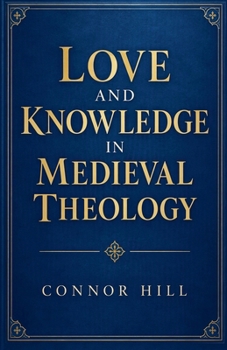
Love and Knowledge in Medieval Theology

Among the many questions that occupied the minds of medieval theologians, few proved as enduring, comprehensive, and transformative as the question of the relationship between love and knowledge. The issue was neither merely speculative nor solely devotional. Rather, it touched the very heart of Christian existence, shaping conceptions of God, humanity, salvation, contemplation, ethics, and ecclesial life. To know God and to love God were universally recognized as fundamental aims of the Christian journey, yet medieval thinkers repeatedly asked whether these aims were ultimately distinct, mutually dependent, or perhaps inseparable. Does genuine knowledge of God necessarily generate love? Can love itself become a mode of knowledge? Is the intellect the highest faculty of the human soul, or does the will achieve a superiority through charity? Such questions animated centuries of theological reflection and gave rise to some of the most sophisticated intellectual and spiritual traditions in Western history.
Customer Reviews
ThriftBooks ® and the ThriftBooks ® logo are registered trademarks of Thrift Books Global, LLC
