


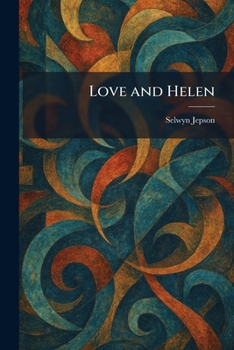
Love and Helen

Select Format
Select Condition 
Book Overview
"Love and Helen" is a captivating romantic adventure by Selwyn Jepson, a master of early 20th-century popular fiction. Set against the vibrant backdrop of the late 1920s, the novel follows the spirited and determined Helen as she navigates the complexities of modern love and social expectations. Jepson blends humor with a fast-paced narrative, showcasing his talent for creating relatable characters who seek excitement and genuine connection in a rapidly changing world.
As the story unfolds, readers are treated to a charming exploration of identity and romance. Helen's journey is not merely about finding a partner, but about asserting her independence and following her heart despite the obstacles in her path. This work stands as a delightful example of the lighthearted yet insightful fiction that entertained readers during the interwar period, offering a glimpse into the manners and morals of the era. With its witty dialogue and engaging plot, "Love and Helen" remains a testament to Jepson's skill in crafting enduring tales of adventure and the heart.
This work has been selected by scholars as being culturally important, and is part of the knowledge base of civilization as we know it. This work was reproduced from the original artifact, and remains as true to the original work as possible. Therefore, you may see the original copyright references, library stamps (as most of these works have been housed in our most important libraries around the world), and other notations in the work.
This work is in the public domain in the United States of America, and possibly other nations. Within the United States, you may freely copy and distribute this work, as no entity (individual or corporate) has a copyright on the body of the work.
As a reproduction of a historical artifact, this work may contain missing or blurred pages, poor pictures, errant marks, etc. Scholars believe, and we concur, that this work is important enough to be preserved, reproduced, and made generally available to the public. We appreciate your support of the preservation process, and thank you for being an important part of keeping this knowledge alive and relevant.
Customer Reviews
ThriftBooks ® and the ThriftBooks ® logo are registered trademarks of Thrift Books Global, LLC
