


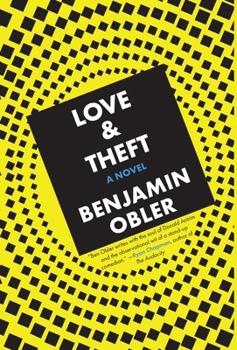
Love & Theft

What is theft? A car stolen in the Catskills. A screenplay appropriated in Brooklyn. A man who steals his fianc e's trust. A child who steals a shoebox from a stranger.
LOVE & THEFT by Benjamin Obler follows three intersecting plots across upstate New York and Brooklyn:
Hank Delaney, cash-strapped and desperate, recruits Ray Ram rez to help him steal a legendary Shelby Mustang from Segal Metalworks. The car is already leased to a film production shooting a TV series called Love & Theft. But Ray falls for Shelby Segal, the owner's sister, and his loyalties split down the middle.
Paul Boustrophedon, a trademark attorney, abandons his fianc e Pamela to join Nolan Pilcrow's crusade: proving that director D.A. Chimister stole Pilcrow's screenplay. Their alliance depends on Sylvie Virgule, the series' star-who owes Chimister her career, her sobriety, and possibly her freedom.
And Walter Chamaran, a prodigy in Nova Scotia, narrates it all from the margins of his mother's yoga studio, writing from an understanding gleaning in trancelike states. When the theft unfolds, Walter makes a choice in hopes of preventing someone else's tragedy, and by doing so heals himself.
Obler's prose balances comic energy with moral gravity. The dialogue snaps; the metaphors stick. Characters carry names that are also tools of writing, a signature gesture that invites readers to wonder: who is controlling this story?
Set against the backdrop of a solar eclipse and the rise of streaming television, Love & Theft arrives at an unsettling conclusion. The car gets sold. The lawsuit collapses. The narrator quits. And the reader must decide: what happens to a story after the author walks away?
Customer Reviews
ThriftBooks ® and the ThriftBooks ® logo are registered trademarks of Thrift Books Global, LLC
