


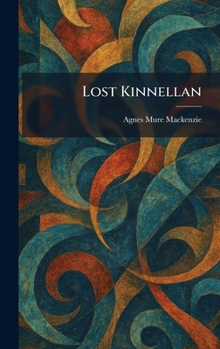
Lost Kinnellan

"Lost Kinnellan" is a poignant and atmospheric psychological novel set against the evocative backdrop of the Scottish Highlands. Written by the acclaimed historian and novelist Agnes Mure Mackenzie, the story delves into the intricate emotional lives of its characters, exploring the tensions between duty, desire, and the weight of social expectations.
The narrative centers on the inhabitants of the Kinnellan estate, weaving a tragic tale of a troubled marriage and the profound isolation that can exist even within the closest of relationships. Mackenzie's prose is noted for its sensitivity and its ability to capture the subtle shifts in human temperament. As the characters grapple with their internal conflicts and the consequences of their choices, the novel becomes a meditation on the fragility of happiness and the enduring impact of the past.
"Lost Kinnellan" stands as a significant work of early 20th-century Scottish fiction, offering readers a deep and moving exploration of the human heart and the somber beauty of its northern setting. This work remains a compelling example of Mackenzie's literary talent, blending sharp psychological insight with a vivid sense of place and a masterful control of narrative tension.
This work has been selected by scholars as being culturally important, and is part of the knowledge base of civilization as we know it. This work was reproduced from the original artifact, and remains as true to the original work as possible. Therefore, you may see the original copyright references, library stamps (as most of these works have been housed in our most important libraries around the world), and other notations in the work.
This work is in the public domain in the United States of America, and possibly other nations. Within the United States, you may freely copy and distribute this work, as no entity (individual or corporate) has a copyright on the body of the work.
As a reproduction of a historical artifact, this work may contain missing or blurred pages, poor pictures, errant marks, etc. Scholars believe, and we concur, that this work is important enough to be preserved, reproduced, and made generally available to the public. We appreciate your support of the preservation process, and thank you for being an important part of keeping this knowledge alive and relevant.
Customer Reviews
ThriftBooks ® and the ThriftBooks ® logo are registered trademarks of Thrift Books Global, LLC
