


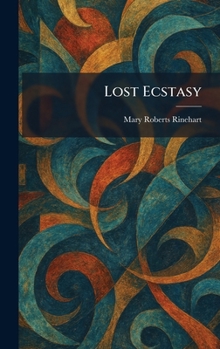
Lost Ecstasy

"Lost Ecstasy" is a compelling exploration of the clash between Eastern high society and the rugged realities of the American West. The story follows Kay Dowling, a wealthy young woman from a prominent family, whose life is forever changed when she encounters Tom Spain, a proud and independent cowboy. What begins as a brief encounter on her father's ranch evolves into a turbulent and passionate journey across the shifting landscapes of early 20th-century America.
Mary Roberts Rinehart expertly weaves a narrative of romantic tension and cultural divide, examining the sacrifices made in the pursuit of true love. As Kay attempts to bridge the gap between her pampered upbringing and the demands of the frontier, "Lost Ecstasy" captures the spirit of transformation and the enduring allure of the wilderness. This work stands as a significant contribution to American romantic fiction, showcasing Rinehart's ability to portray complex emotional depths and the stark beauty of the ranching life. Rich in atmosphere and character development, the novel remains a poignant reflection on identity, social expectations, and the raw power of human connection.
This work has been selected by scholars as being culturally important, and is part of the knowledge base of civilization as we know it. This work was reproduced from the original artifact, and remains as true to the original work as possible. Therefore, you may see the original copyright references, library stamps (as most of these works have been housed in our most important libraries around the world), and other notations in the work.
This work is in the public domain in the United States of America, and possibly other nations. Within the United States, you may freely copy and distribute this work, as no entity (individual or corporate) has a copyright on the body of the work.
As a reproduction of a historical artifact, this work may contain missing or blurred pages, poor pictures, errant marks, etc. Scholars believe, and we concur, that this work is important enough to be preserved, reproduced, and made generally available to the public. We appreciate your support of the preservation process, and thank you for being an important part of keeping this knowledge alive and relevant.
Customer Reviews
ThriftBooks ® and the ThriftBooks ® logo are registered trademarks of Thrift Books Global, LLC
