


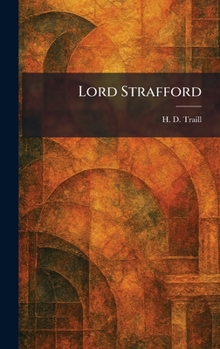
Lord Strafford

"Lord Strafford" by H.D. Traill is a compelling biographical study of Thomas Wentworth, the 1st Earl of Strafford, one of the most polarizing and influential figures in seventeenth-century British history. As a primary advisor to King Charles I, Strafford's life and political career are inextricably linked to the tumultuous events leading up to the English Civil War. Traill provides a detailed examination of Strafford's rise to power, his controversial administration in Ireland, and his unwavering commitment to the royal prerogative, which ultimately led to his tragic downfall and impeachment.
The work delves into the complex character of a man who was both feared and respected, exploring the political philosophy of "Thorough" and the shifting alliances of the Caroline era. Traill analyzes the legal and moral dimensions of Strafford's trial, offering insights into the broader conflict between the Crown and Parliament. This biography serves as an essential resource for readers interested in the political intrigues of the Stuart period and the individuals who shaped the course of the British monarchy. Through meticulous historical analysis, "Lord Strafford" highlights the tensions of an era defined by religious strife and the struggle for constitutional authority.
This work has been selected by scholars as being culturally important, and is part of the knowledge base of civilization as we know it. This work was reproduced from the original artifact, and remains as true to the original work as possible. Therefore, you may see the original copyright references, library stamps (as most of these works have been housed in our most important libraries around the world), and other notations in the work.
This work is in the public domain in the United States of America, and possibly other nations. Within the United States, you may freely copy and distribute this work, as no entity (individual or corporate) has a copyright on the body of the work.
As a reproduction of a historical artifact, this work may contain missing or blurred pages, poor pictures, errant marks, etc. Scholars believe, and we concur, that this work is important enough to be preserved, reproduced, and made generally available to the public. We appreciate your support of the preservation process, and thank you for being an important part of keeping this knowledge alive and relevant.
Customer Reviews
ThriftBooks ® and the ThriftBooks ® logo are registered trademarks of Thrift Books Global, LLC
