


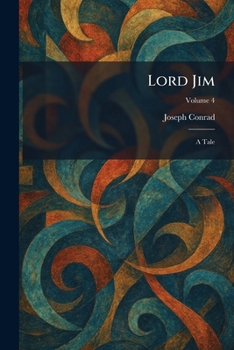
Lord Jim: A Tale

"Lord Jim" is a profound exploration of guilt, honor, and the elusive nature of redemption, written by the master stylist Joseph Conrad. The story centers on Jim, a young and idealistic merchant seaman who, in a moment of panic, abandons the seemingly doomed ship Patna along with his fellow crew members, leaving behind hundreds of pilgrims to their fate. While the ship ultimately survives, Jim's reputation is shattered, and he spends the rest of his life haunted by his split-second decision to forsake his duty.
The narrative follows Jim's subsequent attempts to outrun his past as he travels across the Malay Archipelago. Eventually finding himself in the remote territory of Patusan, he becomes a charismatic leader and protector of the local people, earning the title "Tuan Jim." Through the perspective of the recurring narrator Marlow, Conrad delves into the psychological depths of a man struggling to reconcile his self-image with his actions. A landmark of early modernist fiction, "Lord Jim" is celebrated for its intricate narrative structure and its timeless meditation on the fragility of the human ego and the burden of moral failure.
This work has been selected by scholars as being culturally important, and is part of the knowledge base of civilization as we know it. This work was reproduced from the original artifact, and remains as true to the original work as possible. Therefore, you may see the original copyright references, library stamps (as most of these works have been housed in our most important libraries around the world), and other notations in the work.
This work is in the public domain in the United States of America, and possibly other nations. Within the United States, you may freely copy and distribute this work, as no entity (individual or corporate) has a copyright on the body of the work.
As a reproduction of a historical artifact, this work may contain missing or blurred pages, poor pictures, errant marks, etc. Scholars believe, and we concur, that this work is important enough to be preserved, reproduced, and made generally available to the public. We appreciate your support of the preservation process, and thank you for being an important part of keeping this knowledge alive and relevant.
Customer Reviews
ThriftBooks ® and the ThriftBooks ® logo are registered trademarks of Thrift Books Global, LLC
