


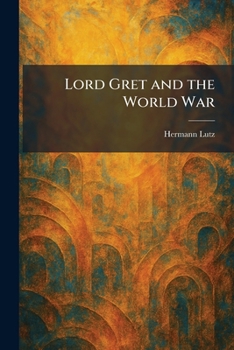
Lord Gret and the World War

Select Format
Select Condition 
Book Overview
"Lord Gret and the World War" is a compelling historical investigation that scrutinizes British foreign policy and the diplomatic maneuvers leading to the outbreak of the First World War. Authored by Hermann Lutz, this work focuses on the actions and decisions of British leadership during a period of immense international tension. Through a detailed analysis of primary sources and diplomatic records, the book explores the complex alliances and the secret negotiations that defined European politics in the early 20th century.
The narrative provides a critical perspective on the origins of the Great War, challenging established views on national responsibility and the inevitability of the conflict. Lutz meticulously examines the July Crisis and the various factors that contributed to the breakdown of international relations. This volume serves as an important contribution to the study of modern history, offering readers a deep dive into the geopolitical complexities and the high-stakes diplomacy of the era. "Lord Gret and the World War" remains a valuable resource for those interested in the political history of Europe and the historical debate surrounding the causes of global warfare.
This work has been selected by scholars as being culturally important, and is part of the knowledge base of civilization as we know it. This work was reproduced from the original artifact, and remains as true to the original work as possible. Therefore, you may see the original copyright references, library stamps (as most of these works have been housed in our most important libraries around the world), and other notations in the work.
This work is in the public domain in the United States of America, and possibly other nations. Within the United States, you may freely copy and distribute this work, as no entity (individual or corporate) has a copyright on the body of the work.
As a reproduction of a historical artifact, this work may contain missing or blurred pages, poor pictures, errant marks, etc. Scholars believe, and we concur, that this work is important enough to be preserved, reproduced, and made generally available to the public. We appreciate your support of the preservation process, and thank you for being an important part of keeping this knowledge alive and relevant.
Customer Reviews
ThriftBooks ® and the ThriftBooks ® logo are registered trademarks of Thrift Books Global, LLC
