


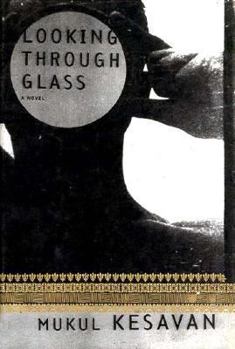
Looking Through Glass


Select Format
Select Condition 
Book Overview
Looking through Glass is a powerful and immensely entertaining novel set in the troubled 1940s - the era of India's partition and independence. Its narrator is our contemporary, an ambitious young... This description may be from another edition of this product.
Format:Hardcover
Language:English
ISBN:0374190852
ISBN13:9780374190859
Release Date:January 1995
Publisher:Farrar Straus & Giroux
Length:374 Pages
Weight:1.44 lbs.
Dimensions:9.3" x 1.3" x 6.5"
Customer Reviews
3 ratings
Indian magic realism and a touch of farce
Published by Thriftbooks.com User , 22 years ago
The nameless narrator of this Indian author's first novel, is a modern young photographer on route to deposit his grandmother's ashes in the Ganges when he falls from the Mail Train and lands in 1942.Pretending amnesia, he is taken in by a Muslim family which includes a young revolutionary, Masroor, his sister Asharf,i and Ammi, the mother who is waiting for a husband who disappeared some years before on a Haj, a pilgrimage to Mecca.At first terrified, our narrator refuses to stir from the house, in fear he may change history, until finally he is impelled out of doors by the discovery that he has head lice.It's the day of the Quit India Resolution, voted by the new Indian Congress, a result that Masroor has feared because he believes it will lead to partition of the country between Hindus and Muslims.Taken by Masroor to a barber, the hapless narrator is immediately embroiled in Indian politics when he is the only witness to Masroor's disappearance - into the recruiting poster on the side of an army truck.Kesavan combines magic realism and outright farce in an energetic, even frenetic, story of the displaced narrator's life in a time not his own. At first the narrator feels only the futility of political effort - for him, history is already ordained and the fervor of people like Masroor seems futile and puppetlike.But once he is caught up in life - earning a living as a waiter, developing attachments, saving a young, unwed, pregnant actress from the clutches of a pornographer, meeting his grandmother, doing his inept best to manipulate the lives of his friends for their own good - history becomes a backdrop to life.Beautifully written, funny, sometimes raunchy, sometimes sly, the novel's only real flaw is its meandering story line. Some events (as in life) seem to have no real purpose and no goal. Others serve only to introduce figures of history whose walk-on parts intimately affect the lives of those who've never met them.An unusual and entertaining novel with layers of meaning, many of which I suspect eluded me as they may elude other American readers.
attached emotionally/intellectually to India? Read this book
Published by Thriftbooks.com User , 26 years ago
Walking my dog in lawns of the Old Fort in New Delhi early one morning in the summer of 1998, I froze in my tracks as I remembered the line from Looking Through Glass, "The fort is a sump, said Angrez Mashriqi, into which the Mussalmans of Hindustan are being drained." 1947 and the following year are the darkest years in India's recent history. India's independence and partition in the August of '47 was followed by upheaval that left a million dead and made refugees of over 10 million. A nation was torn apart not only physically but also psychologically. The wounds fester unhealed to this day. To people sensitive to India's history and psychology, Mukul Kesavan gives a book that, more than ANY other, transports the reader to India's most important years of the last three centuries. The book does not tell a story. Nor is it a history book. It is meditation in which the author takes the reader on an odyssey through the events and times that were India's trial by fire. This work is much more an experience than just a book.
Terrific read, full of humour, almost like being there
Published by Thriftbooks.com User , 27 years ago
Forget the stylistic pyrotechnics of Salman Rushdie and the heady exotica of Arundhati Roy. This is a book by a writer who knows how to tell a straightforward (or backward ... in time, that is) very well indeed. Its very, very funny and highly evocative of its time (pre-independence India) and locations (Delhi, Shimla, Lucknow, Benaras of those days). Its a bright and sunny book, ideal for a good old-fashioned read, which will transport you completely. Of all the talented Indian writers in English, Mukul Kesavan is one of the most underrated. I feel he is the best of the whole lot- and I have read Rushdie, Roy, Seth, Chandra, Ghosh et al. You won't regret reading this book, specially if you have lived in the time or places described. You should read it if you weren't there - its the next best thing to being there and living there from day to day.
Copyright © 2026 Thriftbooks.com Terms of Use
| Privacy Policy | Do Not
Sell/Share My Personal Information | Cookie Policy | Cookie Preferences | Accessibility Statement
ThriftBooks® and the ThriftBooks® logo are registered trademarks of Thrift Books Global, LLC
ThriftBooks® and the ThriftBooks® logo are registered trademarks of Thrift Books Global, LLC
