


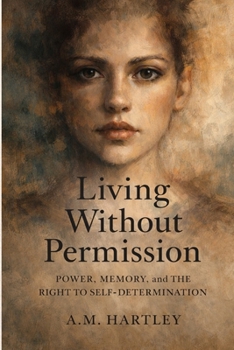
Living Without Permission: Power, Memory, and the Right to Self-Determination

Most people don't think of themselves as asking for permission to live. Yet many of us spend years seeking approval before speaking, changing direction, setting boundaries, or deciding who we want to become.
Living Without Permission explores how power quietly shapes our lives-not only through laws or institutions, but through expectations, silence, memory, and the belief that some voices matter more than others.
Rather than taking sides or telling readers what to think, A.M. Hartley examines questions that often go unasked. Why are some people expected to move on while others decide when history should be remembered? Why can inclusion exist without real influence? When does acceptance become another form of control?
Drawing on themes of colonisation, inequality, dignity, autonomy, and self-determination, this book encourages readers to look beyond appearances and consider how power operates in everyday life.
This is not a manifesto.
It is not a call to outrage.
It is an invitation to think deeply about freedom, belonging, and what it means to live with dignity-without waiting for permission.
For readers who enjoy thoughtful books about society, justice, identity, and the human experience, Living Without Permission offers reflection, challenge, and a fresh way of seeing the world.
Customer Reviews
ThriftBooks ® and the ThriftBooks ® logo are registered trademarks of Thrift Books Global, LLC
