


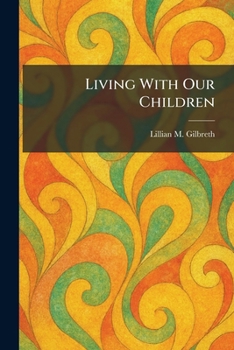
Living With Our Children

"Living With Our Children" is a pioneering study on the intersection of scientific management and domestic life. Written by Lillian M. Gilbreth, a renowned psychologist and industrial engineer, the work applies the principles of efficiency and organizational psychology to the challenges of child-rearing and household administration. Gilbreth advocates for a "planned home" where cooperation and mutual respect serve as the foundation for a harmonious family environment.
The text explores practical methods for involving children in household responsibilities, fostering independence, and creating a structured yet flexible routine that benefits both parents and offspring. By treating the family as a unique social unit that requires thoughtful leadership and shared goals, "Living With Our Children" offers a timeless perspective on how to balance the demands of modern life with the emotional and developmental needs of children. This influential work remains a cornerstone in the history of home economics and parenting literature, reflecting Gilbreth's belief that the home is the most important laboratory for human development.
This work has been selected by scholars as being culturally important, and is part of the knowledge base of civilization as we know it. This work was reproduced from the original artifact, and remains as true to the original work as possible. Therefore, you may see the original copyright references, library stamps (as most of these works have been housed in our most important libraries around the world), and other notations in the work.
This work is in the public domain in the United States of America, and possibly other nations. Within the United States, you may freely copy and distribute this work, as no entity (individual or corporate) has a copyright on the body of the work.
As a reproduction of a historical artifact, this work may contain missing or blurred pages, poor pictures, errant marks, etc. Scholars believe, and we concur, that this work is important enough to be preserved, reproduced, and made generally available to the public. We appreciate your support of the preservation process, and thank you for being an important part of keeping this knowledge alive and relevant.
Customer Reviews
ThriftBooks ® and the ThriftBooks ® logo are registered trademarks of Thrift Books Global, LLC
