


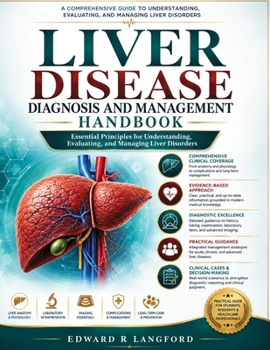
Liver Disease Diagnosis and Management Handbook: Essential Principles for Understanding, Evaluating, and Managing Liver Disorders

LIVER DISEASE DIAGNOSIS AND MANAGEMENT HANDBOOK
Essential Principles for Understanding, Evaluating, and Managing Liver Disorders
Liver disease can range from mild biochemical abnormalities to complex conditions involving cirrhosis, portal hypertension, liver failure, and liver cancer. Recognizing the underlying cause and understanding the clinical approach are essential for effective patient care.
Liver Disease Diagnosis and Treatment Handbook provides a structured and practical introduction to the evaluation and management of a broad range of liver disorders. It brings together fundamental concepts, clinical assessment, laboratory interpretation, imaging, disease-specific management, complications, and long-term follow-up in one organized reference.
Inside, readers will explore:
- Liver anatomy, physiology, and mechanisms of liver injury
- Clinical history taking and physical examination
- Interpretation of liver enzymes, bilirubin, and other biochemical tests
- Ultrasound, CT, MRI, elastography, and other diagnostic imaging approaches
- Acute hepatitis and acute liver injury
- Hepatitis A, hepatitis E, hepatitis B, and hepatitis C
- Metabolic dysfunction-associated steatotic liver disease
- Alcohol-associated liver disease
- Autoimmune and cholestatic liver disorders
- Drug-induced liver injury
- Genetic and metabolic liver diseases
- Cirrhosis and portal hypertension
- Ascites, spontaneous bacterial peritonitis, and hepatic encephalopathy
- Variceal bleeding and other complications of advanced liver disease
- Acute liver failure
- Liver tumors and hepatocellular carcinoma
- Liver disease in special populations
- Liver transplantation and referral for advanced disease
- Long-term monitoring, prevention, and clinical follow-up
- Practical clinical cases and diagnostic decision-making
The book emphasizes a logical approach to clinical reasoning-starting with the patient's presentation, identifying patterns of liver injury, selecting appropriate investigations, assessing disease severity, and developing an informed management strategy.
Whether used for study, clinical reference, or review, this handbook is designed to make the complex field of hepatology easier to understand and navigate.
A practical resource for medical students, residents, healthcare professionals, and readers seeking a structured clinical overview of liver disease.
Customer Reviews
ThriftBooks ® and the ThriftBooks ® logo are registered trademarks of Thrift Books Global, LLC
