


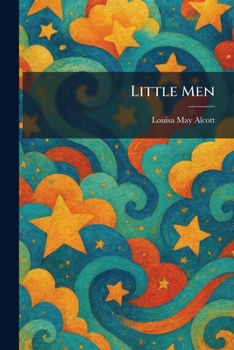
Little Men

"Little Men" is a heartwarming classic of children's literature that continues the story of Jo March from Louisa May Alcott's beloved "Little Women." Set at Plumfield Estate School, the narrative follows Jo and her husband, Professor Bhaer, as they oversee the education and moral development of a diverse group of young boys. Through a series of vignettes and adventures, the work explores themes of kindness, discipline, and the importance of nurturing a child's individual spirit.
The story focuses on the lives of several students, including the orphaned Nat Blake and the rebellious Dan, as they learn valuable life lessons in a supportive, home-like environment. Jo's unconventional teaching methods and maternal guidance create a unique educational setting where character building is as important as academic learning. Alcott's insightful portrayal of childhood captures the joys, struggles, and growth of youth with humor and sincerity. "Little Men" remains a timeless exploration of family and mentorship, offering a poignant look at the challenges and rewards of raising the next generation.
This work has been selected by scholars as being culturally important, and is part of the knowledge base of civilization as we know it. This work was reproduced from the original artifact, and remains as true to the original work as possible. Therefore, you may see the original copyright references, library stamps (as most of these works have been housed in our most important libraries around the world), and other notations in the work.
This work is in the public domain in the United States of America, and possibly other nations. Within the United States, you may freely copy and distribute this work, as no entity (individual or corporate) has a copyright on the body of the work.
As a reproduction of a historical artifact, this work may contain missing or blurred pages, poor pictures, errant marks, etc. Scholars believe, and we concur, that this work is important enough to be preserved, reproduced, and made generally available to the public. We appreciate your support of the preservation process, and thank you for being an important part of keeping this knowledge alive and relevant.
Customer Reviews
ThriftBooks ® and the ThriftBooks ® logo are registered trademarks of Thrift Books Global, LLC
