


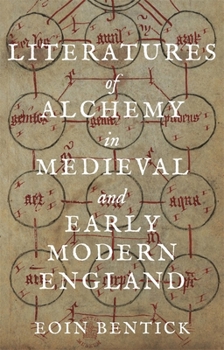
Literatures of Alchemy in Medieval and Early Modern England
No Customer Reviews

Explores the myriad ways in which alchemy was conceptualised by adepts and sceptics alike, from those with recourse to a fully functioning laboratory to those who did not know their pelican from their athanor The language of alchemy (the art of transmuting metals and manufacturing pharmaceutical medicine) is defined by obscure imagery, authorial play and dense knottiness, tempting curious readers to unpick its impenetrable promises. From the fourteenth to the seventeenth century, alchemical literature was read, interpreted and reimagined both by those with recourse to a fully functioning laboratory and those who did not know their pelican from their athanor. Recent studies by historians of science have succeeded in decoding the difficult language of these texts, revealing the replicable chemical procedures behind their metaphors. However, as a literary investigation of alchemy, this book explores more fluid understandings of the art in the period. Through an analysis of medieval and early modern texts and manuscript cultures, the volume explores the myriad ways in which alchemy was conceptualised in this period, by adept and sceptic alike. From Geoffrey Chaucer's mockery of the impotence of alchemical 'pryvetee' in The Canterbury Tales, and John Gower's macrocosmic hope for societal amelioration in the Confessio Amantis, to Elias Ashmole's angelic alchemy in the Theatrum chemicum britannicum, it explores the natural philosophy that underpinned such diverse representations of this 'slidynge science', proffering a theory of 'alchemical hermeneutics' as a conspiratorial way of reading that sees alchemy in all.
Format:Hardcover
Language:English
ISBN:1843846446
ISBN13:9781843846444
Release Date:November 2022
Publisher:Boydell & Brewer
Length:228 Pages
Weight:0.90 lbs.
Dimensions:0.6" x 5.5" x 8.5"
Customer Reviews
0 rating
Copyright © 2026 Thriftbooks.com
Terms of Use | Privacy Policy | Do Not Sell/Share My Personal Information | Cookie Notice | Cookie Preferences | Accessibility Statement
ThriftBooks ® and the ThriftBooks ® logo are registered trademarks of Thrift Books Global, LLC
ThriftBooks ® and the ThriftBooks ® logo are registered trademarks of Thrift Books Global, LLC
