Skip to content
ISBN: 087352568X
ISBN13: 9780873525688

Literature as Exploration

$8.79List Price: $54.00
Save $45.21!
ISBN: 087352568X
ISBN13: 9780873525688
Formats

Conditions

A read copy, but remains in excellent condition.

Formats

Conditions

A read copy, but remains in excellent condition.

See all 8 editionsfrom $7.69

Book Overview

Louise Rosenblatt's Literature as Exploration has influenced literary theorists and teachers of literature at all levels. This attractive trade paperback edition features a new foreword by Wayne Booth, a new preface and retrospective chapter by the author, and an updated list of suggested readings.


In Literature as Exploration, Rosenblatt presents her unique theory of literature and focuses on the immense, often untapped, potential for the study and teaching of literature in a democratic society. The author's philosophy of literature is frequently cited as the first presentation of reader-response theory, but she differs from her successors in emphasizing both the reader and the text. Her transactional theory of literature examines the reciprocal nature of the literary experience and explains why meaning is neither in the text nor in the reader. Each reading is a particular event involving a particular reader and a particular text under particular circumstances. And teachers of literature, Rosenblatt argues, play a pivotal role in influencing how students perform in response to a text.


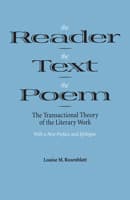
Louise Rosenblatt's Literature as Exploration has influenced literary theorists and teachers of literature at all levels. This attractive trade paperback edition features a new foreword by Wayne Booth, a new preface and retrospective chapter by the author, and an updated list of suggested readings.


In Literature as Exploration, Rosenblatt presents her unique theory of literature and focuses on the immense, often untapped, potential for the study and teaching of literature in a democratic society. The author's philosophy of literature is frequently cited as the first presentation of reader-response theory, but she differs from her successors in emphasizing both the reader and the text. Her transactional theory of literature examines the reciprocal nature of the literary experience and explains why meaning is neither in the text nor in the reader. Each reading is a particular event involving a particular reader and a particular text under particular circumstances. And teachers of literature, Rosenblatt argues, play a pivotal role in influencing how students perform in response to a text.
Format:
Paperback
Language:
English
ISBN:
087352568X
ISBN13:
9780873525688
Release Date:
January 1995
Publisher:
Modern Language Association of America
Length:
342 Pages
Weight:
1.02 lbs.
Dimensions:
0.8″ × 6.0″ × 9.0″
Grade Range:
Postsecondary and higher
Curriculum DevelopmentLiterary AnalysisReading ComprehensionResearch MethodsTeacher TrainingCriticism & TheoryHistory & CriticismHumanitiesLiterary CriticismLiterary Criticism & Collections

More by Louise M. Rosenblatt

Customer Reviews

3 customer ratings | 3 reviews
Write a Review

I got this for . . .

. . . my wife as she is a college professor. So cannot comment beyond this.

0

Ever wonder why you hated literature courses?

Don't feel like a philistine. Don't scratch your head and wonder what is the matter with you for not appreciating the world's great literature. Just read this book and it will all come clear. In all likelihood, your literature teacher didn't know how to teach. Rosenblatt's thesis is that without a pro-active, supportive environment in which a novice reader is credited for those things he or she can discern from his/her experience, knowledge, intuition, and reasoning, the most erudite transfer of knowledge from a 'professional' reader to a novice will at best be a delivery of information not unlike the role the pizza guy performs in bringing you your pizza and at worst, promoting a self-doubting reader who will not feel comfortable with his or her own insights. Assuming that a prime reason for reading literature is to sense the 'transpersonal' between writer and reader, anyone who can read should be able to make that connection since we are all human. Of course, expert knowledge and scholarship have their place, but not the first place. The primary place is within, and it is the job of the promoter of 'literature' to help the student find that place within himself or herself--not demean the unenlightened to exact revenge for all those years of torturous graduate school.

1

A must for all literature teachers

If you teach literature (at any level) and haven't read this book, you probably don't know what you are doing.

1
