


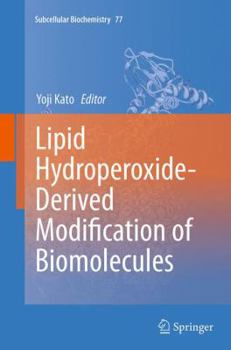
Lipid Hydroperoxide-Derived Modification of Biomolecules
No Customer Reviews

Select Format
Select Condition 
Book Overview
Lipid peroxidation is an important cellular process which can lead to detrimental effects if it is not regulated efficiently. Lipid hydroperoxide is formed in an initial step of lipid peroxidation. Lipid hydroperoxide is also known as a potential source of singlet oxygen. Harmful aldehydes are formed when the lipid hydroperoxide is degraded. The formed aldehyde has high reactivity against thiol or amine moieties. Therefore, it could act as a signaling molecule, which might induce the changing of gears inside a cell. Recent studies have shown that lipid hydroperoxide or a slightly modified product of the lipid hydroperoxide reacts with biomolecules such as proteins and aminophospholipids, which leads to formation of amide-type adducts. Amide-type adducts could be one of markers for oxidative stress and could also be an important player in some diseases. In this book, the chemistry and biochemistry of lipid hydroperoxide along with their conjugates with biomolecules are described.
Format:Paperback
Language:English
ISBN:9402402969
ISBN13:9789402402964
Release Date:September 2016
Publisher:Springer
Length:202 Pages
Weight:0.67 lbs.
Dimensions:0.5" x 6.1" x 9.2"
Customer Reviews
0 rating
Copyright © 2026 Thriftbooks.com Terms of Use
| Privacy Policy | Do Not
Sell/Share My Personal Information | Cookie Policy | Cookie Preferences | Accessibility Statement
ThriftBooks® and the ThriftBooks® logo are registered trademarks of Thrift Books Global, LLC
ThriftBooks® and the ThriftBooks® logo are registered trademarks of Thrift Books Global, LLC
