


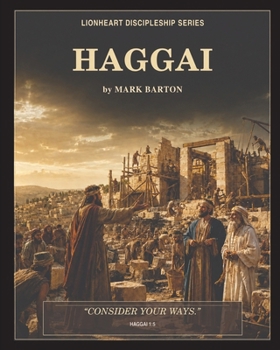
Lionheart Discipleship Expedition Series - Haggai

Haggai records God's urgent yet compassionate call to the Jewish people after their return from exile. King Cyrus of Persia had permitted them to return to Jerusalem and rebuild the temple. Although construction began, opposition, hardship, and discouragement caused the work to stop. By 520 BC, the people had become occupied with their own homes and concerns while God's house remained in ruins.
Through Haggai, God commanded the people to "consider your ways." Their weak harvests, insufficient food, inadequate clothing, and disappearing wages revealed the consequences of misplaced priorities. They were working hard but finding little satisfaction because they had neglected worship and covenant obedience. God called them to gather materials, rebuild the temple, and honor Him.
Governor Zerubbabel, High Priest Joshua, and the remnant responded with reverent obedience. Unlike many who rejected God's prophets, they listened to Haggai and resumed construction. God reassured them, saying, "I am with you," and stirred their spirits to work. Their response shows that obedience does not depend upon human strength alone; God awakens, encourages, and empowers His people to accomplish what He commands.
Some older people remembered Solomon's magnificent temple and considered the new structure insignificant by comparison. God commanded everyone to be strong and continue working because His presence remained among them. The temple's importance did not depend upon outward grandeur. The silver and gold belonged to God, and He promised that the latter glory of the house would exceed the former and that He would grant peace. Within the wider biblical story, this hope ultimately points toward Christ, through whom God dwells with His people and gives true peace.
Haggai's third message exposed the people's spiritual defilement. Religious activity could not replace genuine holiness and obedience. Nevertheless, God's purpose was restoration rather than destruction. From the day they renewed the temple work, He promised to bless them. Though the crops had not yet appeared, they were called to trust His promise before seeing its fulfillment.
God's final message concerned Zerubbabel. The Lord promised to shake the nations, overthrow earthly powers, and make Zerubbabel like a signet ring, symbolizing divine choice and authority. This preserved hope in God's covenant with David. Zerubbabel later appears in the genealogy of Jesus Christ, the promised Davidic King whose kingdom cannot be shaken.
Little personal information is given about Haggai, but his relationship with God is evident in his faithful ministry. He repeatedly speaks as the Lord's messenger, delivering God's words without seeking attention for himself. He confronts sin honestly, encourages discouraged workers, and bases hope entirely upon God's presence, power, and faithfulness.
Haggai does not teach that religious buildings automatically secure God's favor or that obedience always guarantees immediate prosperity. Instead, it warns against pursuing personal comfort while pushing God to the margins. It calls believers to examine their priorities, repent of spiritual neglect, obey despite discouragement, and trust the God who remains with His people. God's correction is not abandonment; it is a loving summons back to worship, fellowship, peace, and hope.
Customer Reviews
ThriftBooks ® and the ThriftBooks ® logo are registered trademarks of Thrift Books Global, LLC
