


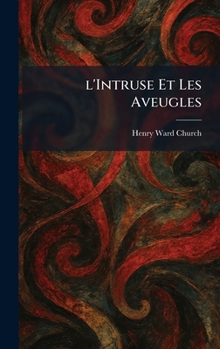
L'Intruse Et Les Aveugles

"L'Intruse" and "Les Aveugles" are two foundational works of the Symbolist movement, written by the Nobel Prize-winning playwright Maurice Maeterlinck. In "L'Intruse," a family gathers in a dimly lit room, their mundane conversation masked by an increasing sense of dread as they unknowingly await the arrival of Death. In "Les Aveugles," a group of sightless individuals is left stranded in an ancient forest, symbolizing the spiritual and existential blindness of humanity in the face of the unknown.
These plays represent a significant shift away from the realism of the nineteenth century, prioritizing atmosphere, symbolism, and the subconscious. Maeterlinck uses silence and rhythmic dialogue to evoke a world where the most profound truths are felt rather than seen. These plays cemented Maeterlinck's reputation as a master of atmospheric drama and have had a profound influence on modern theatre. Readers will find a compelling exploration of mortality, fate, and the limits of human understanding, making these works enduring classics of European literature and essential components of the Symbolist canon.
This work has been selected by scholars as being culturally important, and is part of the knowledge base of civilization as we know it. This work was reproduced from the original artifact, and remains as true to the original work as possible. Therefore, you may see the original copyright references, library stamps (as most of these works have been housed in our most important libraries around the world), and other notations in the work.
This work is in the public domain in the United States of America, and possibly other nations. Within the United States, you may freely copy and distribute this work, as no entity (individual or corporate) has a copyright on the body of the work.
As a reproduction of a historical artifact, this work may contain missing or blurred pages, poor pictures, errant marks, etc. Scholars believe, and we concur, that this work is important enough to be preserved, reproduced, and made generally available to the public. We appreciate your support of the preservation process, and thank you for being an important part of keeping this knowledge alive and relevant.
Customer Reviews
ThriftBooks ® and the ThriftBooks ® logo are registered trademarks of Thrift Books Global, LLC
