


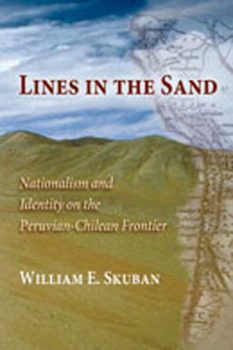
Lines in the Sand: Nationalism and Identity on the Peruvian-Chilean Frontier
No Customer Reviews

Select Format
Select Condition 
Book Overview
Following the War of the Pacific (1879-1883), Chile and Peru signed the Treaty of Ancón (1884) that, in part, dealt with settling a territorial dispute over the provinces of Tacna and Arica along the countries' new common border. The treaty allowed Chile to administer the two provinces for a period of ten years, after which a plebiscite would allow the region's inhabitants to determine their own nationality. At the end of the prearranged decade, however, the Chilean and the Peruvian governments had failed to conduct the vote that would determine the fate of the people. Over a quarter of a century later, and after attempts by the U.S. government to mediate the dispute, the two countries in 1929 decided simply to divide the area, with Arica becoming a part of Chile and Peru reincorporating Tacna. Against the backdrop of this contested frontier, William Skuban explores the processes of nationalism and national identity formation in the half century that followed the War of the Pacific. He first considers the national projects of Peru and Chile in the disputed territories and then moves on to how these efforts were received among the diverse social strata of the region. Skuban's study highlights the fabricated nature of national identity in what became one of the most contentious frontier situations in South American history.
Format:Paperback
Language:English
ISBN:082634223X
ISBN13:9780826342232
Release Date:October 2007
Publisher:Unm Press
Length:342 Pages
Weight:1.15 lbs.
Dimensions:0.9" x 6.3" x 9.0"
Customer Reviews
0 rating
Copyright © 2026 Thriftbooks.com
Terms of Use | Privacy Policy | Do Not Sell/Share My Personal Information | Cookie Policy | Cookie Preferences | Accessibility Statement
ThriftBooks ® and the ThriftBooks ® logo are registered trademarks of Thrift Books Global, LLC
ThriftBooks ® and the ThriftBooks ® logo are registered trademarks of Thrift Books Global, LLC
