


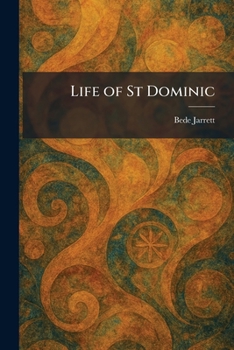
Life of St Dominic

"Life of St Dominic" is a profound and meticulously researched biography of the founder of the Order of Preachers, written by the esteemed Dominican historian Bede Jarrett. This work offers a compelling look at the life and legacy of Dominic de Guzmán, tracing his journey from his origins in Old Castile to his pivotal role in the religious landscape of the thirteenth century. The narrative delves into Dominic's spiritual development, his commitment to apostolic poverty, and his innovative approach to combating heresy through education and rigorous preaching.
Jarrett masterfully captures the personality of the saint, presenting him not only as a visionary leader but also as a man of deep prayer and intellectual vitality. The book explores the establishment of the Dominican Order, highlighting its unique democratic structure and its rapid expansion across Europe's university centers. This account provides essential historical context for the mendicant movement and the intellectual revival of the Middle Ages. Ideal for scholars and general readers alike, "Life of St Dominic" serves as both an inspiring spiritual portrait and a vital piece of ecclesiastical history, documenting the enduring influence of a saint whose work transformed the Catholic Church.
This work has been selected by scholars as being culturally important, and is part of the knowledge base of civilization as we know it. This work was reproduced from the original artifact, and remains as true to the original work as possible. Therefore, you may see the original copyright references, library stamps (as most of these works have been housed in our most important libraries around the world), and other notations in the work.
This work is in the public domain in the United States of America, and possibly other nations. Within the United States, you may freely copy and distribute this work, as no entity (individual or corporate) has a copyright on the body of the work.
As a reproduction of a historical artifact, this work may contain missing or blurred pages, poor pictures, errant marks, etc. Scholars believe, and we concur, that this work is important enough to be preserved, reproduced, and made generally available to the public. We appreciate your support of the preservation process, and thank you for being an important part of keeping this knowledge alive and relevant.
Customer Reviews
ThriftBooks ® and the ThriftBooks ® logo are registered trademarks of Thrift Books Global, LLC
