


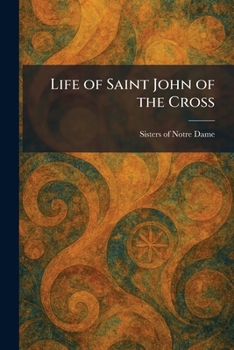
Life of Saint John of the Cross

Select Format
Select Condition 
Book Overview
"Life of Saint John of the Cross" provides a detailed and spiritual account of one of the most profound figures in Christian history. Written by the Sisters of Notre Dame, this biography explores the transformative journey of the Spanish mystic, poet, and reformer who, alongside Saint Teresa of Avila, founded the Discalced Carmelites.
The narrative follows John from his humble beginnings to his pivotal role in the ecclesiastical reforms of the sixteenth century. Readers will gain insight into his deep spiritual trials, including his imprisonment and the composition of his most famous mystical works, such as "The Dark Night of the Soul." The book emphasizes his commitment to asceticism, his unwavering faith, and his enduring influence on Catholic theology and contemplative prayer.
This work serves as both a historical record and a source of spiritual inspiration, highlighting the virtues of humility and divine love that defined Saint John's existence. It is an essential read for those interested in hagiography, the history of the Carmelite Order, and the timeless path of mystical union with God.
This work has been selected by scholars as being culturally important, and is part of the knowledge base of civilization as we know it. This work was reproduced from the original artifact, and remains as true to the original work as possible. Therefore, you may see the original copyright references, library stamps (as most of these works have been housed in our most important libraries around the world), and other notations in the work.
This work is in the public domain in the United States of America, and possibly other nations. Within the United States, you may freely copy and distribute this work, as no entity (individual or corporate) has a copyright on the body of the work.
As a reproduction of a historical artifact, this work may contain missing or blurred pages, poor pictures, errant marks, etc. Scholars believe, and we concur, that this work is important enough to be preserved, reproduced, and made generally available to the public. We appreciate your support of the preservation process, and thank you for being an important part of keeping this knowledge alive and relevant.
Customer Reviews
ThriftBooks ® and the ThriftBooks ® logo are registered trademarks of Thrift Books Global, LLC
