


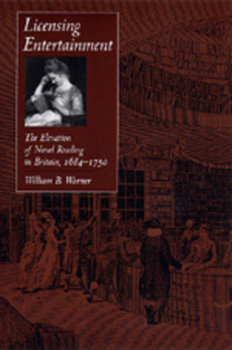
Licensing Entertainment: The Elevation of Novel Reading in Britain, 1684a 1750
No Customer Reviews

Select Format
Select Condition 
Book Overview
Novels have been a respectable component of culture for so long that it is difficult for twentieth-century observers to grasp the unease produced by novel reading in the eighteenth century. William Warner shows how the earliest novels in Britain, published in small-format print media, provoked early instances of the modern anxiety about the effects of new media on consumers.
Warner uncovers a buried and neglected history of the way in which the idea of the novel was shaped in response to a newly vigorous market in popular narratives. In order to rein in the sexy and egotistical novel of amorous intrigue, novelists and critics redefined the novel as morally respectable, largely masculine in authorship, national in character, realistic in its claims, and finally, literary. Warner considers early novelists in their role as entertainers and media workers, and shows how the short, erotic, plot-driven novels written by Behn, Manley, and Haywood came to be absorbed and overwritten by the popular novels of Defoe, Richardson, and Fielding. Considering these novels as entertainment as well as literature, Warner traces a different story-one that redefines the terms within which the British novel is to be understood and replaces the literary history of the rise of the novel with a more inclusive cultural history.
Warner uncovers a buried and neglected history of the way in which the idea of the novel was shaped in response to a newly vigorous market in popular narratives. In order to rein in the sexy and egotistical novel of amorous intrigue, novelists and critics redefined the novel as morally respectable, largely masculine in authorship, national in character, realistic in its claims, and finally, literary. Warner considers early novelists in their role as entertainers and media workers, and shows how the short, erotic, plot-driven novels written by Behn, Manley, and Haywood came to be absorbed and overwritten by the popular novels of Defoe, Richardson, and Fielding. Considering these novels as entertainment as well as literature, Warner traces a different story-one that redefines the terms within which the British novel is to be understood and replaces the literary history of the rise of the novel with a more inclusive cultural history.
Format:Paperback
Language:English
ISBN:0520212967
ISBN13:9780520212961
Release Date:September 1998
Publisher:University of California Press
Length:325 Pages
Weight:1.20 lbs.
Dimensions:1.0" x 6.0" x 9.0"
Customer Reviews
0 rating
Copyright © 2026 Thriftbooks.com
Terms of Use | Privacy Policy | Do Not Sell/Share My Personal Information | Cookie Policy | Cookie Preferences | Accessibility Statement
ThriftBooks ® and the ThriftBooks ® logo are registered trademarks of Thrift Books Global, LLC
ThriftBooks ® and the ThriftBooks ® logo are registered trademarks of Thrift Books Global, LLC
