


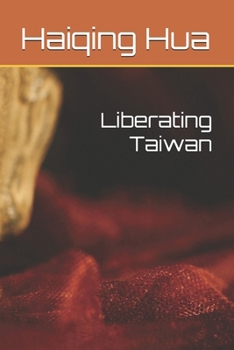
Liberating Taiwan
No Customer Reviews

"Liberating Taiwan" by Haiqing Hua presents a thought-provoking exploration of Taiwan's reunification with mainland China, emphasizing the potential role of artificial intelligence (AI) in achieving this objective. The book meticulously navigates through the complexities of Taiwan's governance dilemmas, historical reflections, specific measures for integration, and the profound implications of AI technology in this process.Overview of Taiwan's Current Governance DilemmasHaiqing Hua opens with an insightful discussion on the prevailing views regarding Taiwan's governance: the urgency of decisive action versus the cautious reliance on future wisdom. The author astutely analyzes the challenges and opportunities inherent in both present and future governance, laying a solid foundation for the subsequent exploration of AI as a liberating force.The Dilemma of GovernanceDelving deeper into the governance issues, Hua explores the intricate background and current state of the Taiwan question. The book acknowledges the difficulty in resolving the issue promptly and the potential notoriety that delayed action may bring. By analyzing the risks and consequences of a wait-and-see strategy, Hua sets the stage for considering alternative approaches, including the innovative use of AI.Historical ReflectionsDrawing on the wisdom of Lu Xun, Hua reflects on the historical difficulties of effecting change in Chinese history. Lu Xun's views are skillfully employed to argue for the feasibility of relying on future wisdom, yet Hua emphasizes the critical need for swift action against reactionary old orders. This historical perspective enriches the reader's understanding of the governance challenges.Paths to Taiwan's Return and GovernanceHua presents a thorough analysis of potential paths for Taiwan's return, debating between peaceful surrender and military unification. The author candidly discusses the pitfalls and dangers associated with peace negotiations and offers a robust debate on post-return governance-whether Taiwan should be managed as a province or a special administrative region.Specific Measures for Taiwan's GovernanceThe book offers detailed administrative and personnel arrangements for Taiwan's governance, emphasizing the importance of the free movement of people and opposing visa systems. Hua also addresses the crucial issue of currency unification, providing viable solutions that underscore the pragmatic approach of the book.Lessons from Culture and HistoryUsing historical examples like Zhu Yuanzhang and the "Great Migration of the Early Ming," Hua explores national integration and governance. The emphasis on decisive decision-making in governance is a recurring theme, advocating for lessons from history to inform contemporary actions.Core Principles of GovernanceHua outlines core principles such as "subduing with power" and "winning hearts" in regaining lost territory. The dual strategy of managing local forces while protecting the common people is meticulously discussed, proposing assertive measures against obstinate forces.Future Integration and DevelopmentThe book envisions future integration strategies post-Taiwan's return, including free movement of people and economic development. Hua highlights the role of the Production and Construction Corps and the significance of digital currency in economic integration.Dissemination of Culture and SpiritAnalyzing the current state of global dissemination of Chinese culture, Hua emphasizes the need for appealing cultural and entertainment products. The book proposes leveraging AI to analyze global cultural markets, thus enhancing China's international cultural influence.World Perspective and the Chinese Soul
Format:Paperback
Language:English
ISBN:B0D8Q57M17
ISBN13:9798329397437
Release Date:June 2024
Publisher:Independently Published
Length:180 Pages
Weight:0.55 lbs.
Dimensions:0.4" x 6.0" x 9.0"
Customer Reviews
0 rating
Copyright © 2026 Thriftbooks.com
Terms of Use | Privacy Policy | Do Not Sell/Share My Personal Information | Cookie Policy | Cookie Preferences | Accessibility Statement
ThriftBooks ® and the ThriftBooks ® logo are registered trademarks of Thrift Books Global, LLC
ThriftBooks ® and the ThriftBooks ® logo are registered trademarks of Thrift Books Global, LLC
