


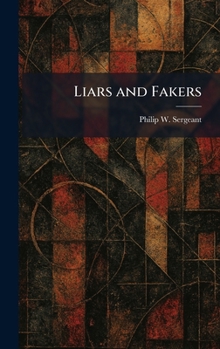
Liars and Fakers

"Liars and Fakers" is a fascinating exploration into the lives of historical impostors and deceivers who captured the public imagination. Philip W. Sergeant examines various individuals throughout history who achieved notoriety through complex lies and fraudulent personas. The work delves into the psychological and social conditions that allowed these figures to succeed in their deceptions, from social climbers to political agitators.
With a keen eye for historical detail, the author presents a series of biographical sketches that reveal the motivations behind these elaborate fakes. Readers will find accounts of some of the most famous charlatans and rogues, shedding light on how they manipulated the truth and the consequences of their eventual exposure. This study serves as a timeless examination of human gullibility and the enduring allure of the counterfeit identity. It remains a compelling resource for those interested in the history of crime, social scandals, and the darker side of human ambition.
This work has been selected by scholars as being culturally important, and is part of the knowledge base of civilization as we know it. This work was reproduced from the original artifact, and remains as true to the original work as possible. Therefore, you may see the original copyright references, library stamps (as most of these works have been housed in our most important libraries around the world), and other notations in the work.
This work is in the public domain in the United States of America, and possibly other nations. Within the United States, you may freely copy and distribute this work, as no entity (individual or corporate) has a copyright on the body of the work.
As a reproduction of a historical artifact, this work may contain missing or blurred pages, poor pictures, errant marks, etc. Scholars believe, and we concur, that this work is important enough to be preserved, reproduced, and made generally available to the public. We appreciate your support of the preservation process, and thank you for being an important part of keeping this knowledge alive and relevant.
Customer Reviews
ThriftBooks ® and the ThriftBooks ® logo are registered trademarks of Thrift Books Global, LLC
