


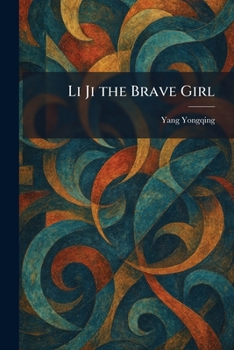
Li Ji the Brave Girl

"Li Ji the Brave Girl" is a captivating retelling of a classic Chinese legend that celebrates the courage and ingenuity of its young heroine. Set in ancient times, the story follows Li Ji, a girl from a humble background who defies tradition and fear to save her community from a terrifying, child-devouring serpent. Unlike the many victims before her, Li Ji relies on her wit and determination rather than mere physical strength, choosing to confront the beast when no one else would.
This timeless tale offers readers a vivid glimpse into Chinese folklore and the cultural values of heroism and resourcefulness. Through the lens of Li Ji's extraordinary journey, the narrative explores themes of self-sacrifice and the power of the underdog. The work serves as an inspiring example of early 20th-century storytelling, bridging the gap between traditional oral myths and modern literary adaptations. "Li Ji the Brave Girl" remains a significant piece of cultural heritage, illustrating the enduring appeal of stories where bravery and cleverness triumph over darkness.
This work has been selected by scholars as being culturally important, and is part of the knowledge base of civilization as we know it. This work was reproduced from the original artifact, and remains as true to the original work as possible. Therefore, you may see the original copyright references, library stamps (as most of these works have been housed in our most important libraries around the world), and other notations in the work.
This work is in the public domain in the United States of America, and possibly other nations. Within the United States, you may freely copy and distribute this work, as no entity (individual or corporate) has a copyright on the body of the work.
As a reproduction of a historical artifact, this work may contain missing or blurred pages, poor pictures, errant marks, etc. Scholars believe, and we concur, that this work is important enough to be preserved, reproduced, and made generally available to the public. We appreciate your support of the preservation process, and thank you for being an important part of keeping this knowledge alive and relevant.
Customer Reviews
ThriftBooks ® and the ThriftBooks ® logo are registered trademarks of Thrift Books Global, LLC
