


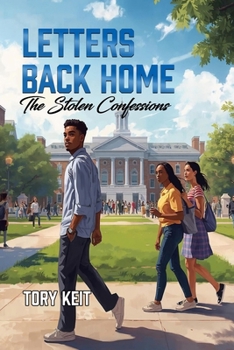
Letters Back Home: The Stolen Confessions

A first-generation college student leaves his Southern hometown for an elite university, convinced that hard work and gratitude are the only acceptable stories he's allowed to tell. On campus, T.K. finds refuge under an ancient oak tree and in weekly letters back home, using the page to confess what he can't say out loud about loneliness, pressure, and the cost of carrying his family's hopes.
When those letters start disappearing-and his parents respond as if he's gone silent-T.K.'s sense of belonging fractures. A trail of missing mail, campus bureaucracy, and uneasy glances at the neighborhood barbershop leads him to a painful discovery: someone close has been intercepting and destroying his most vulnerable words "for his own good."
As workshops and seminars question whether his hybrid project-part neuroscience, part barbershop story, part confessional letter-is "serious enough," T.K. must fight for the legitimacy of a voice that is always told it's either too much or not enough. With the help of friends who refuse to let him disappear into slump season, he rebuilds his thesis and himself, turning stolen letters into evidence that stories from places like Crossroads belong in academic rooms and on international stages.
When a research fellowship in Paris offers him a future his parents never imagined, T.K. has to risk a different kind of honesty: writing home not to perform success, but to ask for partnership. On an old porch under new rules, he and his parents finally read the letters that never arrived and begin to rewrite what family, expectation, and support can look like when no one is editing the truth to protect anyone's comfort.
Back at Thornton, the mailbox that failed him is gone, but the oak still stands. T.K. steps into mentoring first-years who are just as scared of telling the truth as he once was, designing exercises that turn their own secrets-about grades, grief, identity, and pressure-into shared narratives instead of silent wounds. In helping them find language for their lives, he learns how to trust his own voice off the page: in seminar rooms, barbershop chairs, and challenging conversations at home.
Told through letters, scenes under campus trees, and charged conversations in a Black barbershop, Letters Back Home is a coming-of-age story about stolen mail and reclaimed narrative, about what happens when your voice is intercepted-and what it costs, and heals, to take it back. It is for anyone who has ever written into a void, felt like a translation of themselves in "important" spaces, or wondered if telling the truth would be the thing that finally breaks the people they love.
Customer Reviews
ThriftBooks® and the ThriftBooks® logo are registered trademarks of Thrift Books Global, LLC
