


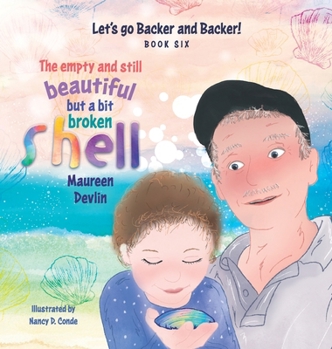
Let's go Backer and Backer: The empty and still beautiful but a bit broken Shell

When a young boy and his grandfather discover a cracked but beautiful shell on the beach, one simple question-how did it get here?-sparks an unforgettable journey of discovery.
Traveling "backer and backer," they trace the shell's story from the ocean waves that carried it ashore to the vast sea that shaped it, the hermit crab who once used it, and the clam who first called it home. Their journey continues to the sandy seafloor, the tiny phytoplankton that nourished it, and ultimately to the warm sun that made it all possible.
Perfect for children ages 2-6, The Empty and Still Beautiful but a Bit Broken Shell is a gentle, beautifully layered story that celebrates curiosity, the wonders of the natural world, and the special bond between grandparents and grandchildren. It reminds readers that even something small, worn, or broken can hold an extraordinary story.
FOR PARENTS:
Encourages curiosity and questions- Helps children see that asking "why" and "how" leads to discovery.
Builds emotional awareness- Reinforces the idea that imperfections don't diminish value-an important early-life lesson.
Strengthens family connection- Highlights the special role grandparents play in storytelling, learning, and emotional development.
Supports bedtime and bonding moments- Calm, reflective pacing makes it ideal for read-aloud time.
Introduces big ideas in a simple way- Gently presents concepts like ecosystems and interconnectedness without overwhelming young readers.
FOR EDUCATORS:
Early STEM and nature-based learning- Introduces foundational concepts such as food chains, habitats, and energy sources while encouraging observation and inquiry-based thinking.
Language and comprehension development- The repetitive "backer and backer" structure supports memory and sequencing skills, while building vocabulary through contextual storytelling.
Social-emotional learning (SEL)- Promotes themes of resilience, perspective, and empathy, and opens discussions about value beyond appearances.
Cross-curricular opportunities- Science: ocean life, ecosystems, and sunlight as an energy source. Literacy: sequencing, cause and effect. Social studies: family roles and relationships
Engaging read-aloud structure- Interactive storytelling invites participation and prediction, making it ideal for group discussion and guided questioning.
Customer Reviews
ThriftBooks ® and the ThriftBooks ® logo are registered trademarks of Thrift Books Global, LLC
