


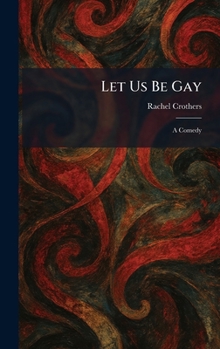
Let Us Be Gay: A Comedy

"Let Us Be Gay" is a sharp-witted and sophisticated comedy written by the influential American playwright Rachel Crothers. Set against the backdrop of high society in the late 1920s, the play explores the complexities of modern marriage, the social stigma of divorce, and the search for personal happiness. The story follows Kitty Brown, a woman who, after discovering her husband's infidelity, chooses to leave him and forge her own path-a bold move for the era. Years later, the estranged couple meets again at a social gathering, leading to a series of clever exchanges and a nuanced examination of love and forgiveness.
As one of Crothers' most successful works, "Let Us Be Gay" showcases her talent for writing realistic dialogue and her keen observation of the changing roles of women in the early 20th century. This three-act play balances lighthearted humor with insightful commentary on the double standards of the time. It remains a significant example of American drawing-room comedy, offering readers a glimpse into the evolving moral landscape of the Jazz Age. The work highlights the enduring tension between social expectations and individual desire, making it a compelling read for those interested in classic American drama and feminist literary history.
This work has been selected by scholars as being culturally important, and is part of the knowledge base of civilization as we know it. This work was reproduced from the original artifact, and remains as true to the original work as possible. Therefore, you may see the original copyright references, library stamps (as most of these works have been housed in our most important libraries around the world), and other notations in the work.
This work is in the public domain in the United States of America, and possibly other nations. Within the United States, you may freely copy and distribute this work, as no entity (individual or corporate) has a copyright on the body of the work.
As a reproduction of a historical artifact, this work may contain missing or blurred pages, poor pictures, errant marks, etc. Scholars believe, and we concur, that this work is important enough to be preserved, reproduced, and made generally available to the public. We appreciate your support of the preservation process, and thank you for being an important part of keeping this knowledge alive and relevant.
Related Subjects
DramaCustomer Reviews
ThriftBooks ® and the ThriftBooks ® logo are registered trademarks of Thrift Books Global, LLC
