


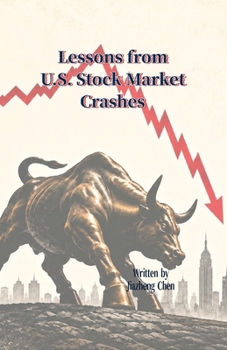
Lessons from U.S. Stock Market Crashes

Why did U.S. stocks keep falling for six months after Lehman Brothers collapsed? Why did the S&P 500 recover its pre-9/11 level within a month, yet not hit bottom until a year later? And why did one sudden shock stop at a drop of about 12% in 2001, while another erased a third of the market in thirty-three days in 2020?
Lessons from U.S. Stock Market Crashes is not a chronicle of market disasters. It is an analytical history that dissects every major U.S. stock market crash from 1997 to today with one consistent method: the Asian financial crisis and the collapse of Long-Term Capital Management (1997-1998), the dot-com bust (2000-2002), September 11 (2001), the global financial crisis (2007-2009), the Flash Crash (2010), Europe's debt crisis and America's credit downgrade (2011), the shocks from abroad in 2015-2016, the sell-off of late 2018, the pandemic crash (2020), the rate-hike bear market (2022), and the tariff shock of 2025.
The book's central idea is simple: separate the trigger from the deeper structural fragility. Headlines tell you which straw broke the camel's back; this book shows how the load was piled on in the first place. Every crash is taken apart in the same eight layers: the backdrop, the surface trigger, pre-existing fragility, transmission, amplification, policy and the floor, hindsight misreadings, and what it all means for ordinary people.
The author also reduces every crash to a "periodic table" of ten recurring elements: overvaluation, leverage, maturity mismatch, credit deterioration, policy repricing, falling earnings expectations, a spike in risk premiums, evaporating liquidity, forced selling, and feedback among financial institutions. By the later chapters, you will recognize the pattern on your own: crises that look completely different on the surface keep returning to the same few mechanisms.
Inside, you will also find:
How bubbles grow, and why "this time is different" keeps being wrong
Who made money in each crash, and why their stories are so hard to copy
How panic, herd behavior and loss aversion turn into amplifiers
The most common hindsight misreadings, including the biggest one: believing you can predict the next crash
How each major crash rewrote the rules of the financial system
Written in plain, engaging language, the book explains every concept with an everyday analogy and defines every term on first use, so no background in finance is needed. It stays neutral on contested political and international disputes, presenting each side's interests and how they reached the market, while calling atrocities such as the September 11 attacks what they were. Key dates, index levels and declines have been checked against public records, unverifiable details have been left out, and sources for every statement about real people are listed in an appendix. Original diagrams, timelines and quick-reference appendices make the material easy to review.
This book will not teach you to time the market, pick stocks or predict the next crash. It will help you read financial news with a clearer eye, understand the system your money lives in, and keep your head the next time everyone else is losing theirs.
This book is a historical and analytical study, not investment advice.
Customer Reviews
ThriftBooks ® and the ThriftBooks ® logo are registered trademarks of Thrift Books Global, LLC
