


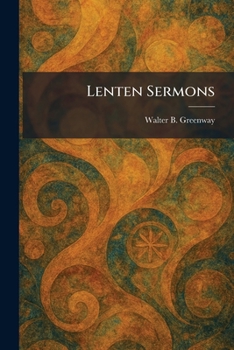
Lenten Sermons

"Lenten Sermons" is a compelling collection of spiritual discourses authored by Reverend Walter B. Greenway. Designed to guide readers through the solemn season of Lent, this work offers a series of profound reflections on faith, repentance, and the redemptive power of the Christian message. Each sermon explores central biblical themes, providing both theological insight and practical encouragement for the faithful during their period of preparation for Easter.
The collection stands as a significant example of early twentieth-century American homiletics, capturing the tone and spiritual concerns of the era. Reverend Greenway's writing is characterized by its clarity and pastoral warmth, making complex spiritual concepts accessible to a broad audience. Whether used for personal devotion, group study, or as a resource for clergy, "Lenten Sermons" remains a valuable tool for those seeking to deepen their understanding of the Lenten journey and the foundational tenets of the Christian faith. The work emphasizes the enduring importance of spiritual discipline and the pursuit of a closer relationship with the divine.
This work has been selected by scholars as being culturally important, and is part of the knowledge base of civilization as we know it. This work was reproduced from the original artifact, and remains as true to the original work as possible. Therefore, you may see the original copyright references, library stamps (as most of these works have been housed in our most important libraries around the world), and other notations in the work.
This work is in the public domain in the United States of America, and possibly other nations. Within the United States, you may freely copy and distribute this work, as no entity (individual or corporate) has a copyright on the body of the work.
As a reproduction of a historical artifact, this work may contain missing or blurred pages, poor pictures, errant marks, etc. Scholars believe, and we concur, that this work is important enough to be preserved, reproduced, and made generally available to the public. We appreciate your support of the preservation process, and thank you for being an important part of keeping this knowledge alive and relevant.
Customer Reviews
ThriftBooks ® and the ThriftBooks ® logo are registered trademarks of Thrift Books Global, LLC
