


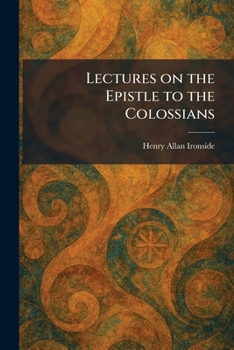
Lectures on the Epistle to the Colossians

"Lectures on the Epistle to the Colossians" is a comprehensive and insightful exposition of the Pauline letter to the church at Colossae. In this collection of lectures, H. A. Ironside provides a verse-by-verse analysis that highlights the central theme of the epistle: the all-sufficiency and supremacy of Jesus Christ. As a work of biblical commentary, it seeks to clarify the "mystery of God" and the believer's complete standing in Christ, guarding against the legalism and false philosophies that threatened the early church.
Written with the characteristic clarity and spiritual depth that defined Ironside's ministry, these studies explore the profound doctrines of Christology and the practical implications of the Christian faith. The work delves into the nature of the "new man" and the ethical duties of the believer in various spheres of life, from the home to the workplace. This commentary remains an essential resource for those desiring a clear, orthodox, and encouraging examination of the Book of Colossians, offering timeless wisdom for both personal study and public teaching.
This work has been selected by scholars as being culturally important, and is part of the knowledge base of civilization as we know it. This work was reproduced from the original artifact, and remains as true to the original work as possible. Therefore, you may see the original copyright references, library stamps (as most of these works have been housed in our most important libraries around the world), and other notations in the work.
This work is in the public domain in the United States of America, and possibly other nations. Within the United States, you may freely copy and distribute this work, as no entity (individual or corporate) has a copyright on the body of the work.
As a reproduction of a historical artifact, this work may contain missing or blurred pages, poor pictures, errant marks, etc. Scholars believe, and we concur, that this work is important enough to be preserved, reproduced, and made generally available to the public. We appreciate your support of the preservation process, and thank you for being an important part of keeping this knowledge alive and relevant.
Customer Reviews
ThriftBooks ® and the ThriftBooks ® logo are registered trademarks of Thrift Books Global, LLC
