


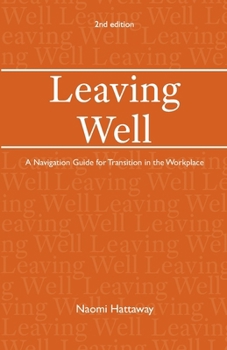
Leaving Well: A Navigation Guide for Transition in the Workplace (2nd edition)

People leave.
Resignations, terminations, transitions, and other necessary endings are common challenges facing every organization. This is reality. All too often, when people leave, a familiar cycle repeats: processes aren't passed along properly, and remaining employees are left to absorb new workloads, grief, and stress. Even when ample notice is given, it's often submitted without a plan for a seamless transition. And the reverse is just as true-organizations hire new people constantly, and how you handle the exit before them inevitably sets the stage for how the next person experiences your culture.
Many leaders pour their energy into hiring, attracting diverse talent pools, and onboarding, yet rarely address the systemic problems sitting underneath every departure. Think back over the last twelve months: how many exits has your organization faced? Beyond the stress of the transition itself, there are real time and money costs tied to bringing on any interim or new hire-including the relationship-building and trust it takes to get them up to speed. And that's assuming a typical exit. Handled poorly, your organization risks losing years of impact with every transition. It doesn't have to be this way.
This second edition builds on the original Leaving Well(TM) framework with updated tools, sharper language, and real-world case examples from years of guiding nonprofit leaders, boards, and funders through transitions of every size. A culture of leaving well protects your reputation, preserves the mental health of your people, and maintains the professional relationships that keep your mission funded. In other words: the way people leave is exactly where change-making organizations should start problem-solving.
Customer Reviews
ThriftBooks ® and the ThriftBooks ® logo are registered trademarks of Thrift Books Global, LLC
