


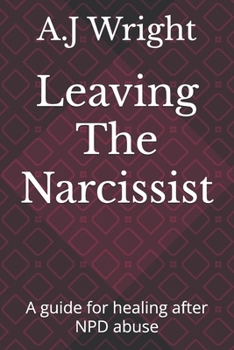
Leaving The Narcissist: A guide for healing after NPD abuse
No Customer Reviews

Narcissism is a term that is often thrown around in casual conversation, yet its complexity is often underestimated. At its core, narcissism is characterized by an excessive self-focus, an inflated sense of self-importance, and a profound lack of empathy for others. Those who exhibit narcissistic traits may appear charming and charismatic at first, but beneath this fa ade lies a deep-seated insecurity and a fragile self-esteem that fuels their behavior. One of the most defining traits of a narcissist is their grandiosity. This manifests as an exaggerated belief in their own superiority and a persistent need for admiration. They may boast about their achievements, seek constant validation, and expect special treatment from those around them. This grandiose self-image is not merely a fa ade; it serves as a defense mechanism to shield them from feelings of inadequacy. When their inflated self-image is challenged, narcissists can react with anger, defensiveness, or even rage, often lashing out at those who dare to criticize or question them. Another hallmark of narcissistic behavior is a profound lack of empathy. Narcissists struggle to recognize or care about the feelings and needs of others, often viewing relationships as a means to an end. For them, connections with others are primarily about what they can gain-be it admiration, attention, or control. This lack of empathy can lead to significant emotional harm for their partners, as they may dismiss feelings, invalidate experiences, and manipulate situations to maintain a sense of superiority. In addition to grandiosity and a lack of empathy, narcissists often exhibit a sense of entitlement. This sense of entitlement manifests in their belief that they deserve special treatment and that rules do not apply to them. They may feel justified in exploiting others or taking advantage of situations that benefit them, often without regard for the consequences. This entitlement can create an environment where their partners feel devalued and unworthy, as the narcissist's needs consistently take precedence. Narcissistic behavior can also be characterized by a tendency to exploit others. Narcissists often use manipulation to achieve their goals, whether that involves emotional manipulation, gaslighting, or guilt-tripping. They may twist situations to portray themselves as victims, thus evading responsibility for their actions while simultaneously drawing attention and sympathy from others. This exploitation can foster an atmosphere of confusion and self-doubt for their partners, who may begin to question their own perceptions and experiences. Moreover, narcissistic individuals often exhibit a pattern of unstable relationships. They may idealize someone one moment, showering them with affection and admiration, only to devalue them the next. This cycle can create an emotional rollercoaster for those involved with a narcissist, leading to feelings of whiplash and uncertainty. As the narcissist's needs shift, so too does their treatment of others, creating a volatile dynamic that can be incredibly damaging. Alongside these traits, narcissists can be incredibly charming and persuasive, especially in the early stages of a relationship. Their charisma and confidence can initially draw people in, masking their more destructive behaviors. This charm often serves as a bait, luring partners into a relationship that may later reveal itself as toxic. Once the initial phase of idealization fades, the underlying narcissistic traits become more apparent, leaving partners feeling trapped and bewildered.
Format:Paperback
Language:English
ISBN:B0FCC7XDYC
ISBN13:9798286931675
Release Date:June 2025
Publisher:Independently Published
Length:76 Pages
Weight:0.25 lbs.
Dimensions:0.2" x 6.0" x 9.0"
Customer Reviews
0 rating
Copyright © 2026 Thriftbooks.com
Terms of Use | Privacy Policy | Do Not Sell/Share My Personal Information | Cookie Policy | Cookie Preferences | Accessibility Statement
ThriftBooks ® and the ThriftBooks ® logo are registered trademarks of Thrift Books Global, LLC
ThriftBooks ® and the ThriftBooks ® logo are registered trademarks of Thrift Books Global, LLC
