


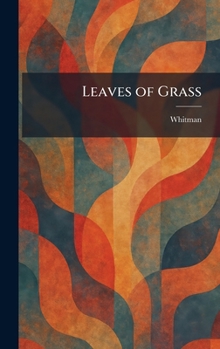
Leaves of Grass

"Leaves of Grass" is a seminal collection of poetry that redefined the landscape of American literature. Written by Walt Whitman, this work celebrates the individual, the natural world, and the burgeoning spirit of democracy in the United States. Through its innovative use of free verse and expansive, rhythmic language, Whitman explores themes of physicality, spirituality, and the interconnectedness of all living things.
From the iconic "Song of Myself" to reflections on the American landscape and the Civil War, the poems within this collection represent a bold departure from traditional poetic structures. "Leaves of Grass" is not merely a book of verse but a profound philosophical statement on the human experience and the common bonds that unite society. It remains a cornerstone of the American canon, inviting readers to find beauty in the mundane and the extraordinary alike. This collection captures the essence of 19th-century American thought while remaining timeless in its exploration of identity and nature.
This work has been selected by scholars as being culturally important, and is part of the knowledge base of civilization as we know it. This work was reproduced from the original artifact, and remains as true to the original work as possible. Therefore, you may see the original copyright references, library stamps (as most of these works have been housed in our most important libraries around the world), and other notations in the work.
This work is in the public domain in the United States of America, and possibly other nations. Within the United States, you may freely copy and distribute this work, as no entity (individual or corporate) has a copyright on the body of the work.
As a reproduction of a historical artifact, this work may contain missing or blurred pages, poor pictures, errant marks, etc. Scholars believe, and we concur, that this work is important enough to be preserved, reproduced, and made generally available to the public. We appreciate your support of the preservation process, and thank you for being an important part of keeping this knowledge alive and relevant.
Customer Reviews
ThriftBooks ® and the ThriftBooks ® logo are registered trademarks of Thrift Books Global, LLC
