


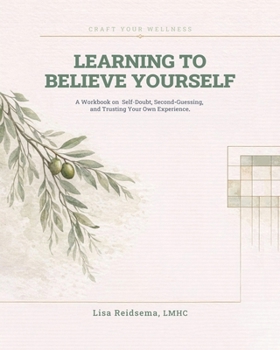
Learning to Believe Yourself

You know what you felt. And then, almost immediately, you begin to wonder if you have it right. Maybe you misread it. Maybe you are too sensitive. Maybe the other person had a point. The second-guessing arrives so fast it feels like reason, but it is not reason. It is a pattern, and it has a history, and that history is worth understanding.
This workbook traces that history. It looks at where you learned to distrust your own read on things, who taught you that your perception was unreliable, and what experiences confirmed that lesson until it became the automatic response to your own inner knowing. It names what that distrust has cost you in relationships, in decisions, and in the ongoing experience of not quite being able to trust yourself even when everything in you is pointing in the same direction.
Learning to Believe Yourself builds the practice of returning to your own experience as a legitimate source of information. It does not ask you to become certain or to stop questioning entirely. It asks you to notice when the questioning has crossed from genuine reflection into habitual self-erasure, and to begin, slowly and with care, to take your own experience seriously again.
Your perception is not the problem. This workbook is about finding your way back to it and learning to stay there.
Customer Reviews
ThriftBooks ® and the ThriftBooks ® logo are registered trademarks of Thrift Books Global, LLC
