


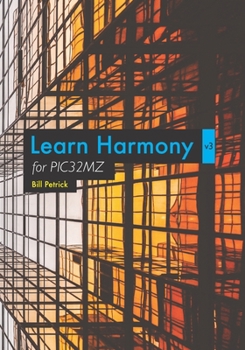
Learn Harmony v3 for PIC32MZ
No Customer Reviews

The Microchip Harmony development environment has evolved to version 3 (Hv3) that accommodates PIC and ATMEL chips. As part of this evolution, the user interface, and hence the way it is used, has changed significantly from the previous versions (Harmony v1 and V2). The purpose of this book is to help Harmony users climb the steep learning curve so they can use Harmony to develop reliable and reproducible applications. My two previous books showed how to use Harmony v2 (and its libraries) for PICMX and PICMZ devices. This third book is intended to be a comprehensive resource that shows the "how" and "why" of Harmony v3 when using the USB, TCP/IP, FreeRTOS, and wolfSSL libraries with a PIC32MZ device (a following book will apply these same examples to an ATSAM device). Part 1 of this book is oriented towards people new to Harmony, and those with Hv2 experience that want to learn how to use Hv3. Part 2 uses many of the examples in the previous books, but adds more descriptions of how and why the examples work to increase the overall understanding of Harmony (especially the TCP/IP library). All of the examples are developed from the bottom-up using multiple, independent state machines that can be added or deleted for other custom applications.Although Harmony and the related toolset are free, there is a significant cost to learn how to use the tools. I believe that anyone following the steps and examples in this book will save weeks of development time when starting or switching to Hv3.
Format:Paperback
Language:English
ISBN:B08F6TVYDL
ISBN13:9798669135928
Release Date:August 2020
Publisher:Independently Published
Length:300 Pages
Weight:1.60 lbs.
Dimensions:0.8" x 7.0" x 10.0"
Customer Reviews
0 rating
Copyright © 2026 Thriftbooks.com Terms of Use
| Privacy Policy | Do Not
Sell/Share My Personal Information | Cookie Policy | Cookie Preferences | Accessibility Statement
ThriftBooks® and the ThriftBooks® logo are registered trademarks of Thrift Books Global, LLC
ThriftBooks® and the ThriftBooks® logo are registered trademarks of Thrift Books Global, LLC
