


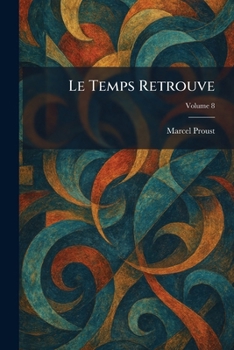
Le Temps Retrouve

"Le Temps Retrouve" serves as the profound and final installment of Marcel Proust's masterpiece, "In Search of Lost Time". Set against the backdrop of a changing France and the devastating effects of World War I, this volume follows the narrator as he returns to Paris after years in a sanatorium. The narrative explores the transformation of the aristocratic circles he once frequented, now reshaped by conflict and the relentless march of time.
Through a series of chance encounters and sensory experiences, the narrator experiences a breakthrough regarding the nature of involuntary memory and the fragility of human existence. This realization leads him to his ultimate vocation: the preservation of life and truth through the medium of literature. "Le Temps Retrouve" is not merely a conclusion but a philosophical meditation on how art can triumph over the decay of time. Rich in psychological depth and intricate prose, this work remains one of the most significant achievements in modern fiction, offering readers a timeless exploration of the human condition and the enduring power of memory.
This work has been selected by scholars as being culturally important, and is part of the knowledge base of civilization as we know it. This work was reproduced from the original artifact, and remains as true to the original work as possible. Therefore, you may see the original copyright references, library stamps (as most of these works have been housed in our most important libraries around the world), and other notations in the work.
This work is in the public domain in the United States of America, and possibly other nations. Within the United States, you may freely copy and distribute this work, as no entity (individual or corporate) has a copyright on the body of the work.
As a reproduction of a historical artifact, this work may contain missing or blurred pages, poor pictures, errant marks, etc. Scholars believe, and we concur, that this work is important enough to be preserved, reproduced, and made generally available to the public. We appreciate your support of the preservation process, and thank you for being an important part of keeping this knowledge alive and relevant.
Customer Reviews
ThriftBooks ® and the ThriftBooks ® logo are registered trademarks of Thrift Books Global, LLC
