


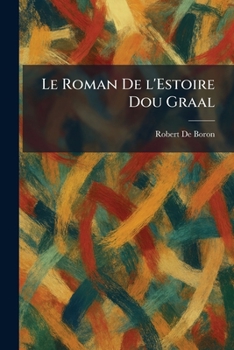
Le Roman De L'Estoire Dou Graal

"Le Roman De l'Estoire Dou Graal" is a cornerstone of medieval literature that fundamentally transformed the Arthurian tradition. Written by Robert de Boron, this influential poem provides the definitive Christian origin story for the Holy Grail, tracing its sacred history from the Last Supper to its eventual arrival in Britain. The narrative follows Joseph of Arimathea, who is entrusted with the vessel and sustains himself through its divine power during his imprisonment.
By bridging biblical history with the legendary world of King Arthur, de Boron creates a spiritual framework for the chivalric quests that would follow in later literature. The work introduces critical elements of the Grail mythos, including the lineage of the Grail keepers and the symbolic connection between the vessel and the blood of Christ. As an essential text in the Matter of Britain, "Le Roman De l'Estoire Dou Graal" offers a profound exploration of faith, mystery, and the evolution of one of Western literature's most enduring symbols. This work remains a vital resource for readers interested in the intersection of medieval theology, folklore, and the origins of the Round Table legends.
This work has been selected by scholars as being culturally important, and is part of the knowledge base of civilization as we know it. This work was reproduced from the original artifact, and remains as true to the original work as possible. Therefore, you may see the original copyright references, library stamps (as most of these works have been housed in our most important libraries around the world), and other notations in the work.
This work is in the public domain in the United States of America, and possibly other nations. Within the United States, you may freely copy and distribute this work, as no entity (individual or corporate) has a copyright on the body of the work.
As a reproduction of a historical artifact, this work may contain missing or blurred pages, poor pictures, errant marks, etc. Scholars believe, and we concur, that this work is important enough to be preserved, reproduced, and made generally available to the public. We appreciate your support of the preservation process, and thank you for being an important part of keeping this knowledge alive and relevant.
Customer Reviews
ThriftBooks ® and the ThriftBooks ® logo are registered trademarks of Thrift Books Global, LLC
