


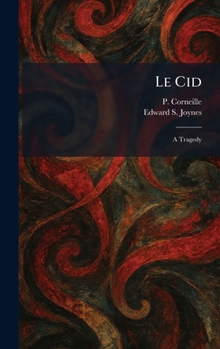
Le Cid: A Tragedy

"Le Cid" is a cornerstone of French classical tragedy, a masterpiece by Pierre Corneille that explores the agonizing conflict between personal passion and social obligation. Set in the medieval Spanish court, the play follows the valiant Rodrigue and the noble Chimène, two lovers whose future is shattered when an insult between their fathers forces Rodrigue to choose between his heart and his family's honor. After a fatal duel, Chimène finds herself torn between her love for Rodrigue and her duty to avenge her father's death.
This legendary work redefined the dramatic standards of its time, introducing a profound psychological depth to its characters and setting the stage for the Great Century of French literature. Celebrated for its powerful rhetoric and intense emotional stakes, "Le Cid" examines themes of heroism, sacrifice, and the relentless demands of duty. This edition features explanatory notes by Edward S. Joynes, providing historical context and linguistic insights that enhance the reader's understanding of Corneille's brilliant verse and complex moral dilemmas. Whether for students of French literature or lovers of classic drama, "Le Cid" remains a timeless exploration of the human heart under pressure.
This work has been selected by scholars as being culturally important, and is part of the knowledge base of civilization as we know it. This work was reproduced from the original artifact, and remains as true to the original work as possible. Therefore, you may see the original copyright references, library stamps (as most of these works have been housed in our most important libraries around the world), and other notations in the work.
This work is in the public domain in the United States of America, and possibly other nations. Within the United States, you may freely copy and distribute this work, as no entity (individual or corporate) has a copyright on the body of the work.
As a reproduction of a historical artifact, this work may contain missing or blurred pages, poor pictures, errant marks, etc. Scholars believe, and we concur, that this work is important enough to be preserved, reproduced, and made generally available to the public. We appreciate your support of the preservation process, and thank you for being an important part of keeping this knowledge alive and relevant.
Customer Reviews
ThriftBooks ® and the ThriftBooks ® logo are registered trademarks of Thrift Books Global, LLC
